EU CE Marking for Type-C Cables: Reading EN 55032 and EN 55024 Test Standards
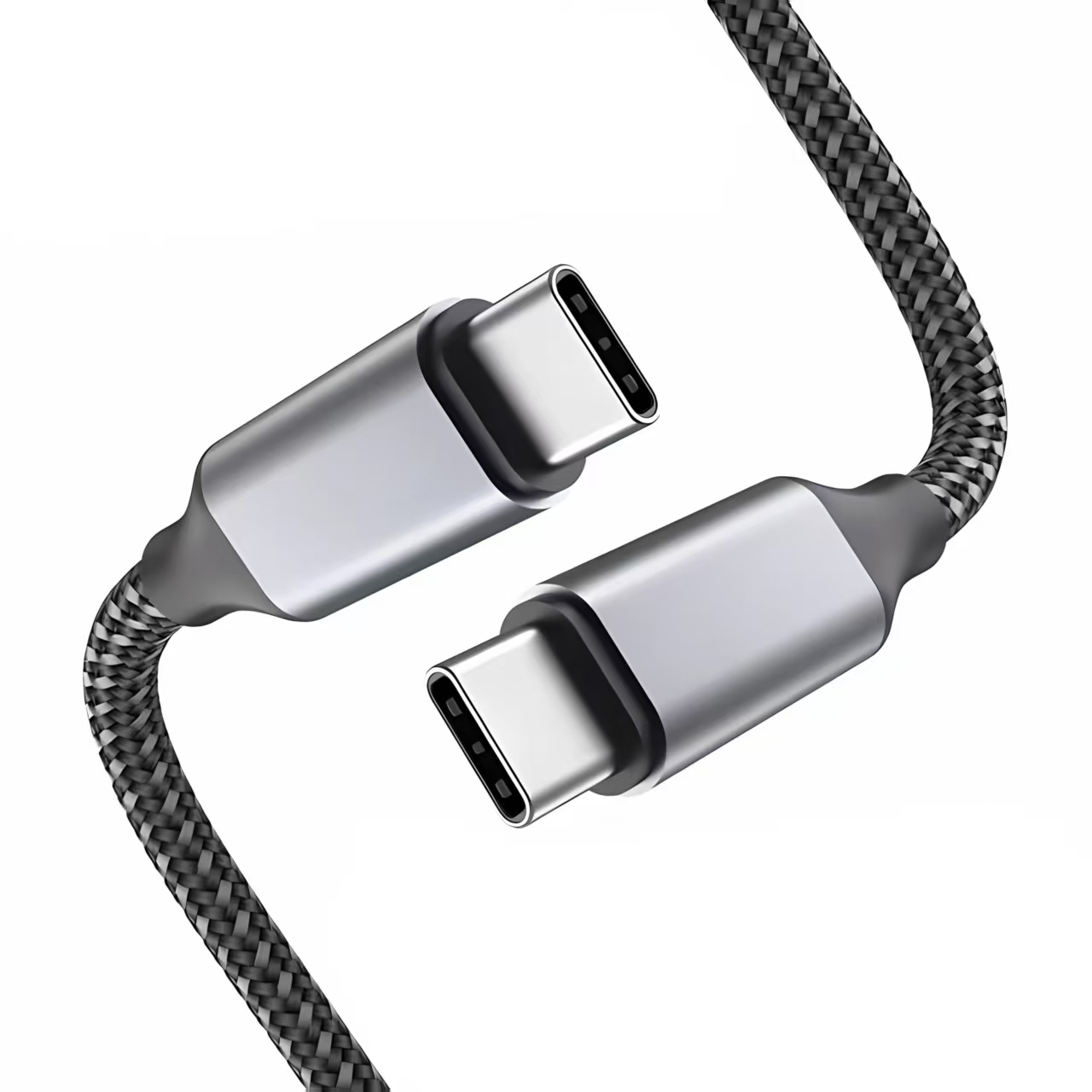
A CE mark on a Type-C cable is only worth what the test report behind it says. For EU buyers, the practical question is not whether a supplier claims CE, but which EN standards were tested, at which version, and whether the certificate number actually covers the cable model being purchased. This guide reads through the standards that appear on a Type-C cable CE certificate — EN 55032:2015, EN 55024:2010+A1:2015, EN 61000-3-2:2014 and EN 61000-3-3:2013 — using the CABLE-LINK Type-C cable CE certificate CTL180320101 as a working example, and explains why scope verification belongs in every EU purchasing checklist.
The Problem: A CE Mark Without a Verifiable Test Scope
Most Type-C cable listings in Europe show a CE logo. Far fewer can produce a certificate number that links a named manufacturer, a defined product, and a dated standard list. That gap is where EU buyers carry the risk.
Three problems recur in real purchasing files:
- Borrowed certificates. A cable is offered under a certificate originally issued for a different accessory category, for example a wall charger or a USB-C charger, without any stated model coverage for the cable itself.
- Version drift. A supplier lists “EN 55032” or “EN 55024” without the publication year or amendment level. Standards are reissued and amended, so an undated reference is not a compliance statement.
- Directive confusion. EMC, RoHS and LVD obligations are treated as one single document by some suppliers, when in practice they are separate legal bases with separate evidence.
For a Type-C data cable or USB-C charging cable, the buyer's decision does not depend on the CE logo. It depends on whether the documentation can survive an audit, a retail compliance request, or a customer quality questionnaire. That is a scope question, and scope is readable.
Industry Background: Why EU Compliance Language for USB-C Changed
EU compliance expectations for USB-C hardware tightened because the market itself was standardised by regulation. The European Union's Common Charger Directive mandated USB-C for portable electronic devices by December 2024, a change affecting more than 400 million units annually according to the European Parliament. When the connector becomes a legal requirement, the documentation behind every USB-C cable and Type-c PD cable becomes a purchasing control rather than a marketing detail.
Parallel technical work moved in the same direction. The USB Type-C Cable and Connector Specification Release 2.4 (October 2024) published by the USB Implementers Forum defines a certification path for charging-only interfaces, allowing 14-pin configurations for power-sensitive devices. Charging-only designs and full-featured designs now follow different technical routes, which makes it more important — not less — for buyers to know exactly which configuration was tested.
Commercial scale explains the pressure. The global USB-C cable market reached USD 6.48 billion in 2024 and is projected to reach USD 20.23 billion by 2033 (Dataintelo). Growth of that size attracts suppliers who optimise for price first and documentation second. One third-party estimate from Market Growth Reports puts the share of USB-C cables on the market that fail USB-IF compliance standards at roughly 30%, a figure best treated as an industry estimate rather than a measured audit, but a useful signal of how uneven quality can be.
The practical consequence for EU importers, distributors and brand owners is straightforward: compliance has to be read, not assumed.
What the Standards Behind a Type-C Cable CE Certificate Actually Test
The CE certificate for CABLE-LINK's Type-C cable, CTL180320101, cites four harmonised standards. Each one answers a different question, and together they define the electromagnetic behaviour of the product in the EU market.
EN 55032:2015 — Electromagnetic Emissions
EN 55032 is the emission standard applied to multimedia equipment. A laboratory measures the electromagnetic energy the product releases — both conducted along the cable and radiated into the air — and compares the readings against defined Class A or Class B limits. Class B is the stricter classification relevant to residential and consumer environments. In procurement terms, EN 55032:2015 tells the buyer that the cable was assessed as a source of interference, not only as a victim of it.
EN 55024:2010+A1:2015 — Electromagnetic Immunity
EN 55024 covers immunity: how the equipment behaves when its environment is electrically hostile. The test programme typically includes electrostatic discharge, radiated and conducted radio-frequency fields, electrical fast transients and bursts, surges, power-frequency magnetic fields and voltage dips. The “+A1:2015” element matters because it confirms the first amendment was applied, not the base document alone. For a USB-C cable used in a laptop dock or retail environment, immunity results are what predict field reliability rather than lab-only performance.
Buyers should also be aware of framework evolution. Older accessory certificates cite EN 55024, while many newer multimedia reports reference the successor immunity framework EN 55035. A certificate is not automatically invalid because it cites EN 55024, but the buyer should understand which framework applies to the product family and the date the report was issued.
EN 61000-3-2:2014 — Harmonic Current Emissions
EN 61000-3-2 controls harmonic currents that equipment injects back into the AC mains. On accessory certificates this standard generally appears where the tested configuration includes a mains-powered element such as a wall charger, a USB C charger or a docking station power supply. Its presence signals that the accessory system, not only the cable, was considered as an electrical load on the EU low-voltage network.
EN 61000-3-3:2013 — Voltage Fluctuations and Flicker
EN 61000-3-3 addresses voltage changes and flicker caused by connected equipment. It is the companion standard to EN 61000-3-2 and, like it, is normally assessed on the powered configuration. Together the two standards answer a question EU retailers increasingly ask: will this accessory cause visible disturbance on the supply it is plugged into?
LVD, EMC Directive and RoHS: Which One Applies to a Cable
These three legal bases are frequently conflated. In practice:
- EMC Directive (2014/30/EU) is the primary basis for a Type-C cable as an electromagnetic product. This is where EN 55032 and EN 55024 belong.
- RoHS Directive (2011/65/EU) restricts hazardous substances and is normally evidenced by a separate RoHS declaration or test report. An EMC certificate does not demonstrate RoHS compliance.
- Low Voltage Directive (2014/35/EU) becomes the relevant safety basis for mains-powered accessories — wall chargers, USB C chargers and docking station power supplies — rather than for a passive cable on its own.
For a Type C Hub or USB C Docking Station, more than one of these bases can apply simultaneously, which is precisely why certificate scope matters for combined accessory purchases.
| Standard cited on CTL180320101 | EMC area | What the laboratory verifies | Question it answers for an EU buyer |
|---|---|---|---|
| EN 55032:2015 | Emissions | Conducted and radiated emissions of multimedia equipment against Class A / Class B limits | Will this cable disturb other equipment or fail retail EMC requirements? |
| EN 55024:2010+A1:2015 | Immunity | Resistance to electrostatic discharge, RF fields, fast transients, surges, magnetic fields and voltage dips | Will the cable keep working in a noisy real-world environment? |
| EN 61000-3-2:2014 | Harmonic current emissions | Harmonic currents injected into the AC mains by the tested configuration | Does the powered accessory behave predictably on EU low-voltage networks? |
| EN 61000-3-3:2013 | Voltage fluctuations and flicker | Voltage changes and flicker caused by the equipment under test | Will the accessory cause visible supply disturbance or lighting flicker? |
Step-by-Step: How to Verify a Type-C Cable CE Certificate Before You Buy
The verification sequence below can be completed on a supplier's compliance pack without a testing background. It takes minutes and removes most of the ambiguity that reaches the purchase order.
- Match the certificate number to the manufacturer and model. Ask for the certificate number in writing — for example CTL180320101 — and for the model list it covers. If the cable SKU on the quotation does not appear in that list, the certificate does not apply to your order.
- Confirm the certificate holder and legal manufacturer. The holder should be the entity that accepts legal responsibility, stated with its full registered name. For CABLE-LINK products this is Changzhou Cable-link Electronics Co., Ltd.
- Identify which directives are covered. Check whether the file addresses EMC only, or EMC plus RoHS, and whether LVD is referenced where a mains-powered accessory is part of the shipment.
- Read the standard versions and amendment dates. Require publication years and amendment levels. “EN 55032:2015” and “EN 55024:2010+A1:2015” are complete references; “EN 55024” alone is not.
- Check the tested configuration and scope. Confirm which cable lengths, connector combinations and power configurations were assessed. A 100W USB-C charging cable and a 10 Gbps Type-c data cable are different builds, and scope boundaries should be explicit.
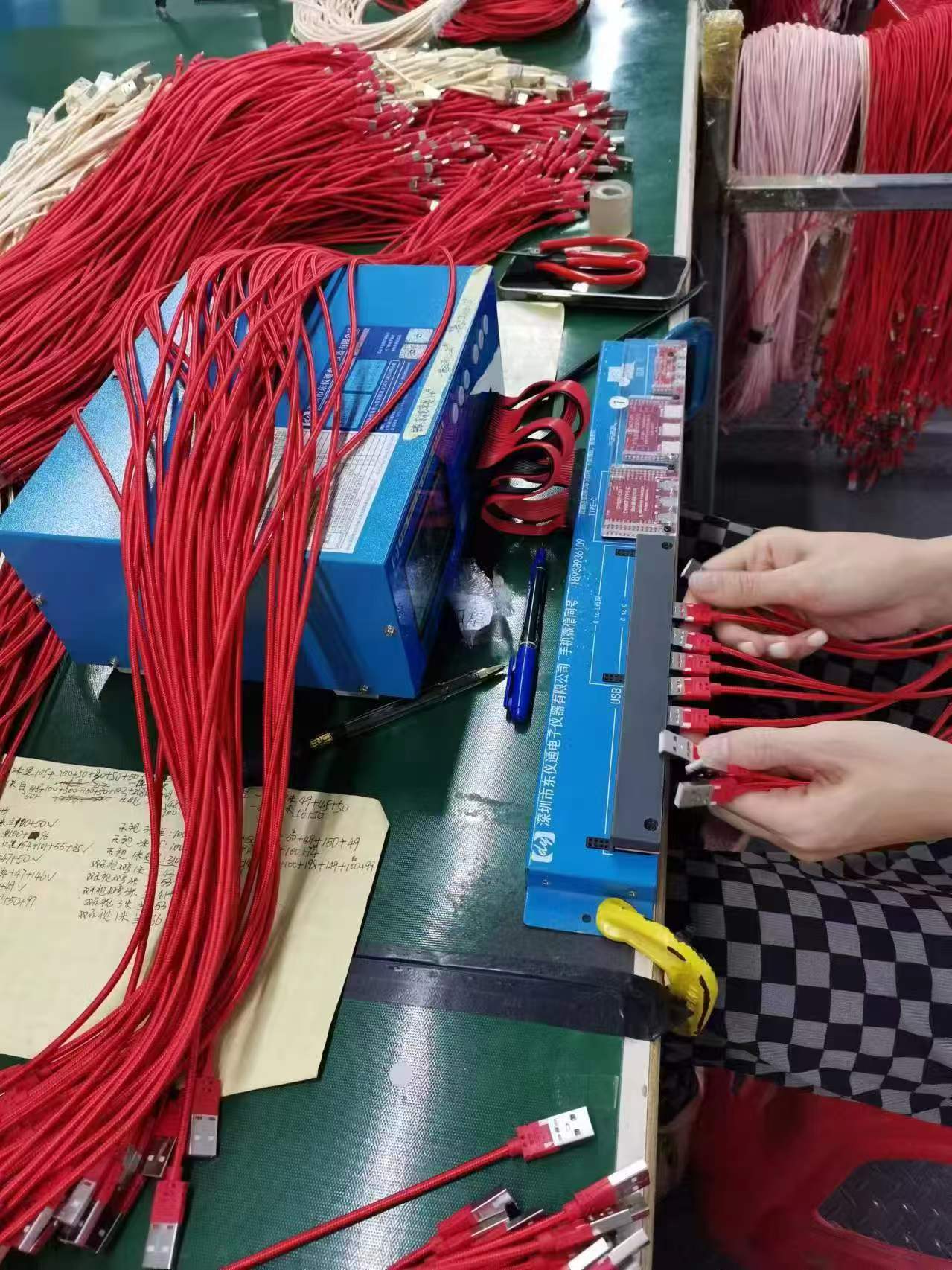
- Verify the issuing laboratory. Confirm the laboratory name and the accreditation behind the report. A certificate with no traceable issuer cannot be defended in a customer audit.
- File it and re-check at each order. Keep the certificate, test report and RoHS documentation together in the project file, and re-request them when the supplier changes a material, a connector or a production site.
Use Cases: Where CE Scope Verification Changes the Buying Decision
1. Retail charging bundles for EU consumer electronics
A brand owner bundles a fast charging cable with a phone accessory and sells into French or German retail. Retailer compliance teams commonly request the test report, not just a CE declaration. A Type-c PD cable with a certificate citing EN 55032:2015 and EN 55024:2010+A1:2015, and with the specific SKU inside the scope, clears that step faster than an undated claim.
2. Laptop expansion and docking projects
USB C Docking Station and Type C Hub projects combine a USB-C cable with powered electronics. Here the EMC and mains-related standards apply to the powered configuration, and buyers should expect the supplier to explain how the accessory system was tested. CABLE-LINK has supplied consumer electronics customers in France with multi-port expansion solutions that have run stably for two years in service.
3. Network data transfer and high-speed builds
Where a Type-c data cable is sold for 10 Gbps data transfer rather than charging, the tested configuration and connector architecture differ from a charging-only build. Verified documentation helps the buyer distinguish between two products that look identical on a shelf. CABLE-LINK has delivered 10 Gbps high-speed transfer solutions for consumer electronics customers in France, with two years of stable operation.
4. Charging programmes in the EU market
Charging projects typically combine a USB-C charging cable, a wall charger and a power bank into one accessory programme. Because the mains-powered parts bring LVD and harmonic considerations into play, the compliance pack should be assembled system-wide rather than cable-by-cable. A CABLE-LINK consumer electronics charging project in France has run stably for two years, supporting the argument that compliance documentation and production control are best handled by the same supplier.
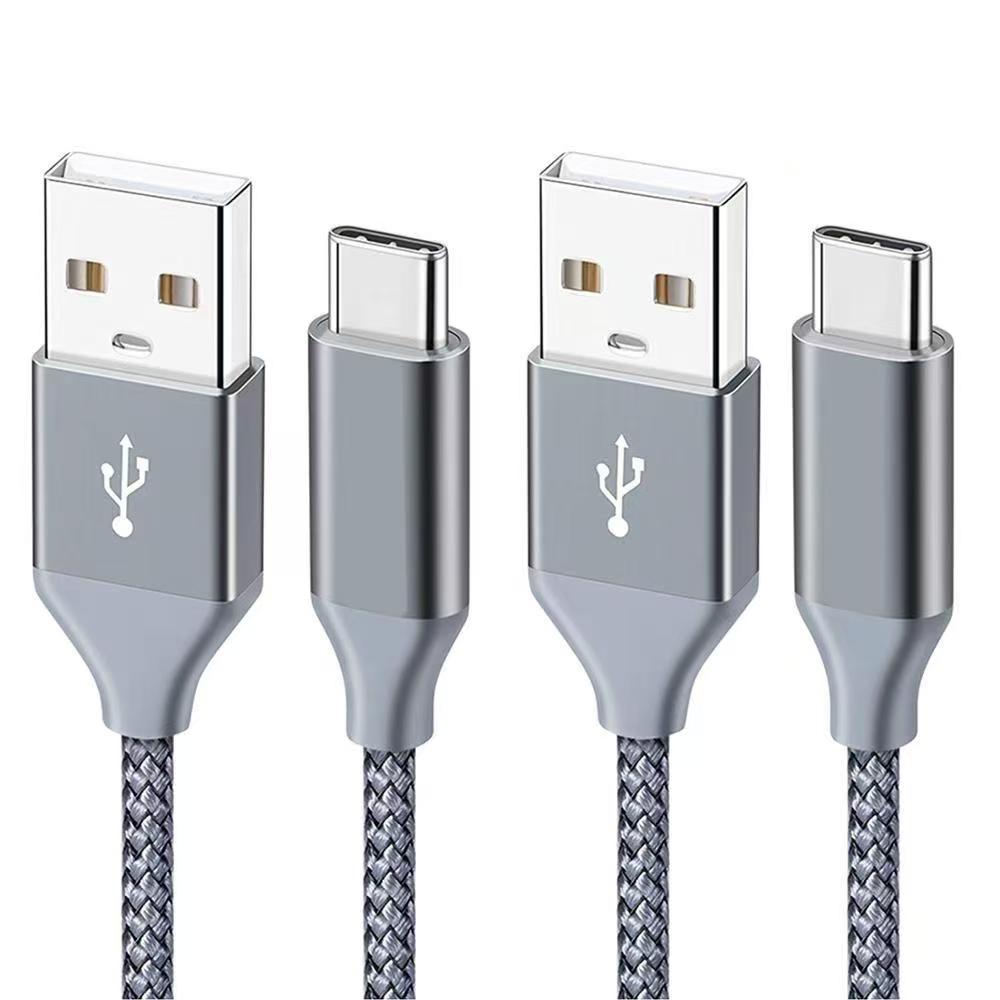
Document Comparison: What Each Compliance File Proves
EU compliance packs usually contain several documents, and each has a limited job. Confusing them is the most common source of avoidable risk.
| Document | Typically issued by | What it proves | What it does not prove |
|---|---|---|---|
| EU Declaration of Conformity | Manufacturer | That the manufacturer accepts legal responsibility for the listed directives | Contains no test data and no model test scope |
| EMC test report | Test laboratory | That the tested sample met the limits of the listed standards | Does not automatically cover other models, lengths or SKUs |
| CE certificate (e.g. CTL180320101) | Certification body or laboratory | That a certificate number is linked to a defined product and standard list | Does not by itself demonstrate RoHS compliance or mains safety |
| RoHS report or declaration | Laboratory or manufacturer | Restricted substance status of the declared materials | Does not address EMC performance |
CABLE-LINK: Type-C Cable Manufacturing with EU Documentation in Mind
Changzhou Cable-link Electronics Co., Ltd. is a cable and power bank manufacturer and exporter established in 2007, operating a 5,000 m² production area with 6 production lines, 65 employees and 3 R&D engineers. The company exports 100% of its output, primarily to the EU and USA, and holds CE, RoHS, REACH, HDMI, MFi, UL and FCC certifications alongside ISO 9001 and BSCI company certification.
For Type-C cable projects, CABLE-LINK operates an OEM model with length and logo customization, a monthly capacity of 300,000 units, a MOQ of 2,000 units and a lead time of around 30 days. Quality control is 100% testing on the line, supported by remote after-sales support for compatibility, technical and usage questions.
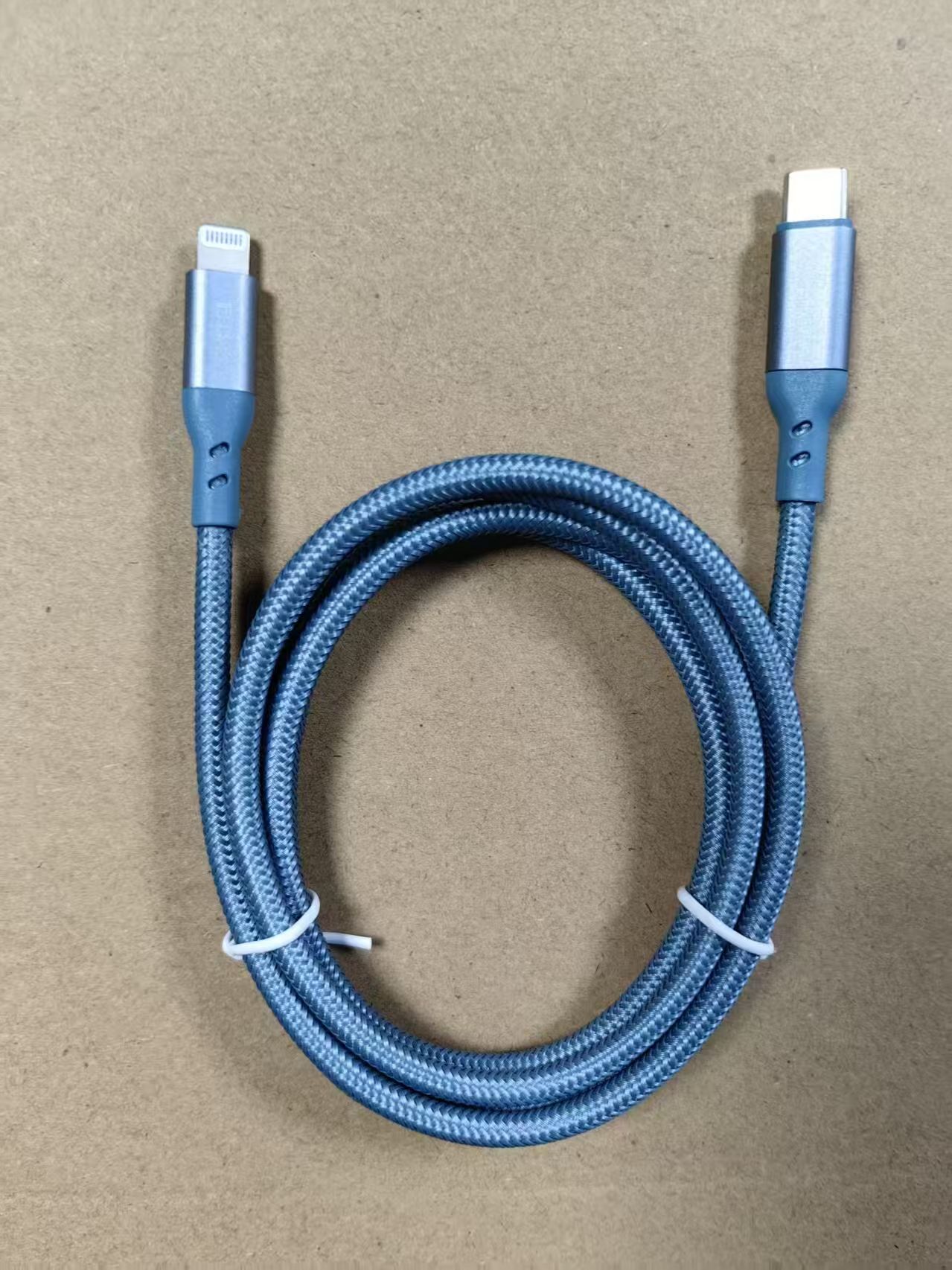
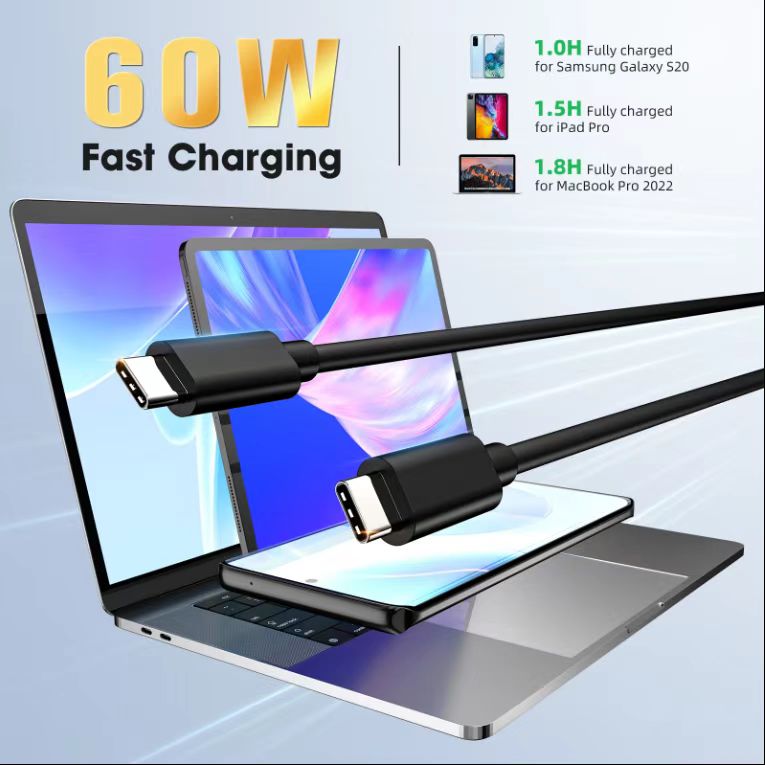
The product family itself is documented. The Type-C cable model CLE-18014 is a USB-C to USB-C PD fast charging and data cable specified at 5A, 20V and 100W maximum, with USB PD 3.0 and QC 3.0/4.0 compatibility, 480 Mbps USB 2.0 data or an optional 10 Gbps USB 3.2 Gen 2 configuration, built from copper, TPE and nylon. Related accessories in the same programme include a wall charger specified from 18W to 65W with QC 3.0 and PD output, and a Type-C Hub with USB4 / Thunderbolt 3 and 4 host compatibility, HDMI 2.1 and DisplayPort 1.4 output, and up to 100W laptop charging.
In EU applications, these products operate in data transfer plus charging mode, and where a mains-powered element is involved, they require supporting equipment such as a charger. That is exactly the configuration in which the EMC, harmonic and flicker standards on the certificate become relevant to the buyer.
FAQ: EU Compliance Questions Buyers Ask About Type-C Cables
Does a Type-C cable need CE marking and an EMC test report to be sold in the EU?
Cables and accessories placed on the EU market must comply with the applicable EU legislation, and for a Type-C cable the primary basis is the EMC Directive, with RoHS as a separate obligation and the Low Voltage Directive relevant to mains-powered accessories. The CABLE-LINK Type-C cable CE certificate CTL180320101 cites EN 55032:2015, EN 55024:2010+A1:2015, EN 61000-3-2:2014 and EN 61000-3-3:2013, and the company holds CE, RoHS and REACH certification. Buyers should still confirm that their exact model, length and configuration fall inside the certificate scope before ordering.
Can CABLE-LINK support OEM Type-C cable projects that require EU compliance documentation?
Yes. CABLE-LINK operates an OEM model with customization of cable length and logo, supported by 3 in-house R&D engineers and 6 production lines. Monthly capacity reaches 300,000 units, quality control applies 100% testing, and after-sales support is provided remotely for compatibility, technical troubleshooting and usage questions. Company certifications include ISO 9001 and BSCI, and product certifications include CE, RoHS, REACH, HDMI, MFi, UL and FCC.
What drives the cost of a CE-compliant Type-C cable?
Cost is driven mainly by construction and scope rather than by the CE mark itself. The variables that matter are conductor material and gauge, shielding architecture, connector plating, whether the cable carries E-Marker electronics for higher-power PD negotiation, whether the data path is USB 2.0 or USB 3.2 Gen 2, and how much customization is applied to length and logo. Documentation scope also affects cost, because a configuration that must be assessed as part of a powered accessory system involves more testing than a cable-only declaration. Buyers comparing quotations should compare the tested configuration at the same time as the price.
How should EU buyers validate a Type-C cable sample before mass production?
Request samples of the exact SKU that will be ordered and check that the model appears in the CE certificate scope. Then validate the claims against your own application: confirm PD negotiation and charging behaviour at the power level you intend to use, confirm the data rate you actually need, and confirm mechanical fit in the device or dock you are shipping. CABLE-LINK supports this stage with remote technical support and 100% tested production, which reduces the gap between sample performance and mass production performance.
What is the MOQ and lead time for a CE-compliant Type-C cable order?
CABLE-LINK's standard OEM terms for Type-C cable production are a MOQ of 2,000 units and a lead time of around 30 days, with monthly capacity of 300,000 units available for scaling and 100% testing on the line. Buyers who need samples, a quotation, the CE certificate pack including CTL180320101, or the full product catalogue can contact David Lee at cablelink@cable-link.cn, by WhatsApp on +86 134-0131-8263, or through www.cable-link.cn.
Conclusion: Read the Standards, Then Read the Scope
EU CE marking for a Type-C cable is not a single document and not a decorative logo. It is a chain: a legal basis under the EMC Directive and RoHS, a set of harmonised standards with defined versions, a laboratory report describing a tested configuration, and a certificate number that ties them to a named manufacturer and product list.
Applied to the standards behind CTL180320101, the reading is concrete. EN 55032:2015 tells you the cable was assessed as an electromagnetic emitter. EN 55024:2010+A1:2015 tells you it was assessed for immunity in a hostile electrical environment, with the first amendment applied. EN 61000-3-2:2014 and EN 61000-3-3:2013 tell you the powered accessory configuration was considered as a load on the mains. Together they answer the questions an EU retailer, importer or brand owner actually asks.
The decision rule for buyers is therefore simple. Before approving a Type-C cable supplier, ask for the certificate number, check that your model is inside the scope, check the standard versions and the amendment dates, and confirm that RoHS evidence and any mains-related safety evidence are supplied separately. If a supplier can answer those four points without hesitation, the compliance conversation is over. If not, price comparison is premature — because the cheapest cable is the one that never has to be recalled.
Request Samples, a Quotation or the CE Documentation Pack
CABLE-LINK supplies Type-C cables, USB-C cables, wall chargers and Type-C hubs to EU and USA buyers under an OEM model with length and logo customization, 2,000-unit MOQ and roughly 30-day lead time. Request a sample, a quotation, or the CE certificate and test-standard documentation referenced in this article.
Contact: David Lee · Email: cablelink@cable-link.cn · Tel / WhatsApp: +86 134-0131-8263 · Website: www.cable-link.cn
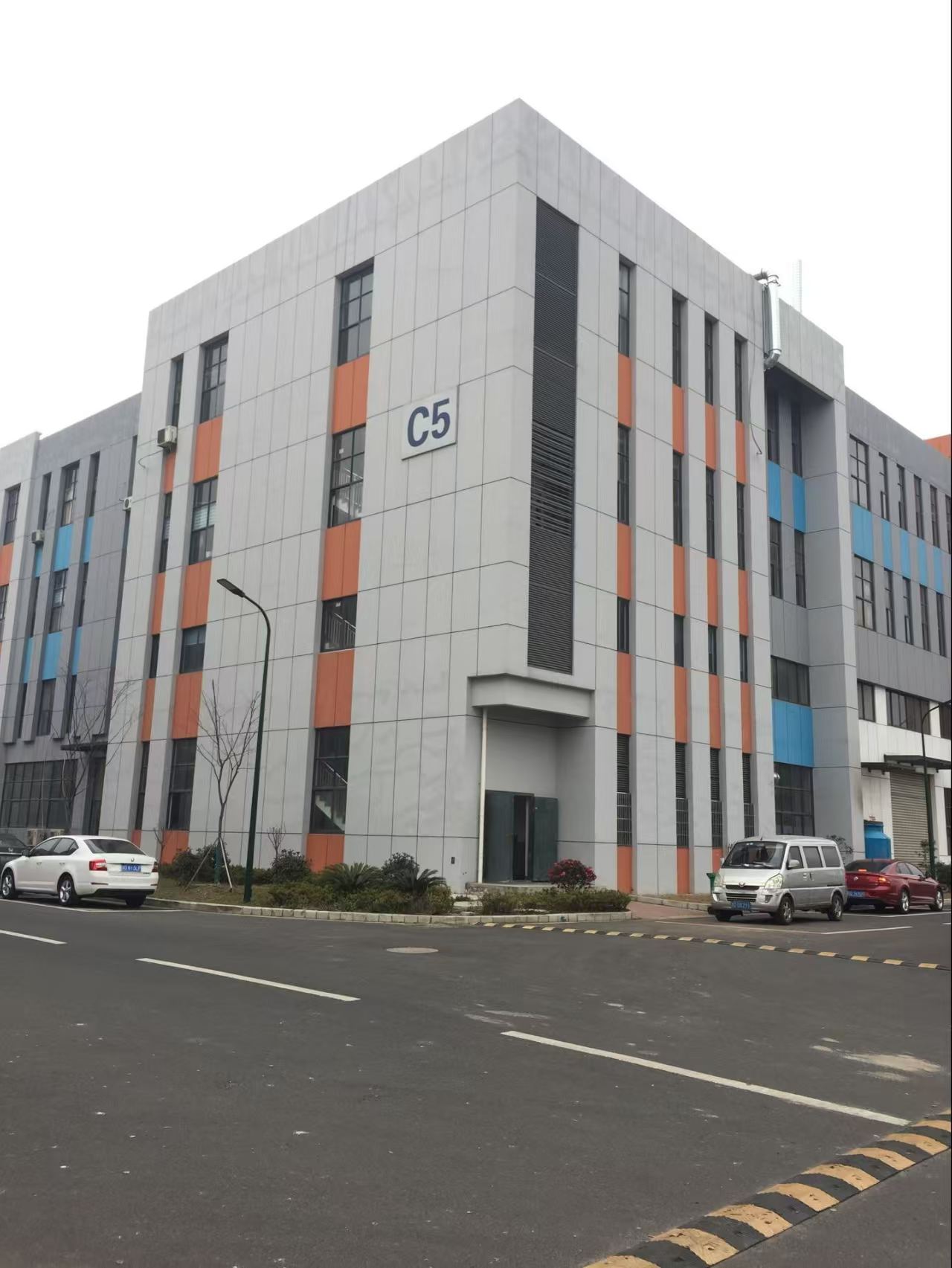
Changzhou Cable-link Electronics Co., Ltd. · C5, Hutang Science & Technology Industry Park, Hutang Town, Wujin Changzhou, Jiangsu, China
Have Questions or Need More Details?
Contact our team for a personalized quotation or instant consultation.
Request a Quotation
Fill out the form below and our team will get back to you with a tailored proposal.
WhatsApp Direct Chat
Prefer to chat in real-time? Message us on WhatsApp for instant assistance & quick answers.
- Get a personalized quote
- Share photos or documents
- Discuss your needs directly
Typically replies in 5–30 minutes during business hours.