Unpacking PD E-Marker IC Technology: How to Choose a Safe and Efficient USB-C Cable
Quick answer: An E-Marker IC is a small identification chip embedded inside a USB-C cable connector. It reports the cable's power and data capability to the charger and to the connected device so that Power Delivery (PD) can negotiate a power level the cable was actually built to carry. Choosing a safe and efficient USB-C cable therefore comes down to three verifiable checks: the E-Marker IC is present, the rated wattage matches the application, and the supplier can support both claims with test evidence and compliance documents.

Why the Safety of a Charging Cable Is Decided Inside the Connector
Two Type-C cables can be visually identical, contain the same metal shell, and still behave completely differently on a 100W charger. The difference is not the braiding, the jacket color, or the length. It is whether the connector houses a working E-Marker IC.
In a PD fast-charging chain, three components negotiate: the charger, the cable, and the device. The charger can only deliver the power that the cable and the device both agree to accept. If a cable cannot identify itself electronically, a well-designed source will fall back to a conservative power level, which is why some cables charge a laptop slowly despite being advertised as a fast charging cable. In weaker designs, current may be pushed through conductors and contacts that were never specified for that load, and the surplus energy appears as heat at the connector and along the cable.
The procurement consequence is that cable quality is not visible during a sample inspection that only checks fit, finish, and plug retention. Heating problems surface after devices are in customers' hands: slower charging than advertised, warm connectors, field returns, and in the worst case a safety and warranty issue for the brand that shipped the accessory. Third-party testing firm Market Growth Reports estimates that roughly 30% of USB-C cables on the market do not meet USB-IF compliance standards, particularly in the area of high-wattage safe charging. For a buyer in the Evaluation to Execution stage, that is the risk to design out before the purchase order, not after.
Market and Regulatory Background Behind E-Marker Adoption
E-Marker electronics moved from a high-end feature to an expected baseline because both the power side and the regulatory side of the market pushed in the same direction.
Demand scale. Dataintelo reports that the global USB-C cable market reached USD 6.48 billion in 2024 and is projected to reach USD 20.23 billion by 2033. The same source values the USB-C charger market at USD 18.7 billion in 2025, with wall chargers holding a 38.5% share. Chargers at the wall are increasingly designed around higher PD power levels, which means the cable becomes the limiting component unless it can identify itself correctly.
Hub and dock demand. Credence Research valued the USB hub market at USD 4.72 billion in 2024, with multi-port hubs accounting for over 55% of that segment. USB C hubs and USB C docking stations typically draw power and data through the same cable connected to the host, so the current-carrying reliability of that cable directly affects whether the dock holds a stable link under load.
Regulation. The European Union's Common Charger Directive mandated USB-C for portable electronic devices by December 2024, affecting more than 400 million units annually. When a single connector standard serves that volume of devices, cable-level power identification becomes a compliance and interoperability question, not a premium feature.
Standards evolution. The USB Type-C Cable and Connector Specification Release 2.4, published in October 2024, defines a certification path for charging-only interfaces, allowing 14-pin configurations for power-sensitive devices. This matters for accessory buyers because power-only cable variants will sit alongside full-featured data cables in the same product families, and correct power identification becomes even more important when the cable carries no data lines to signal its identity.
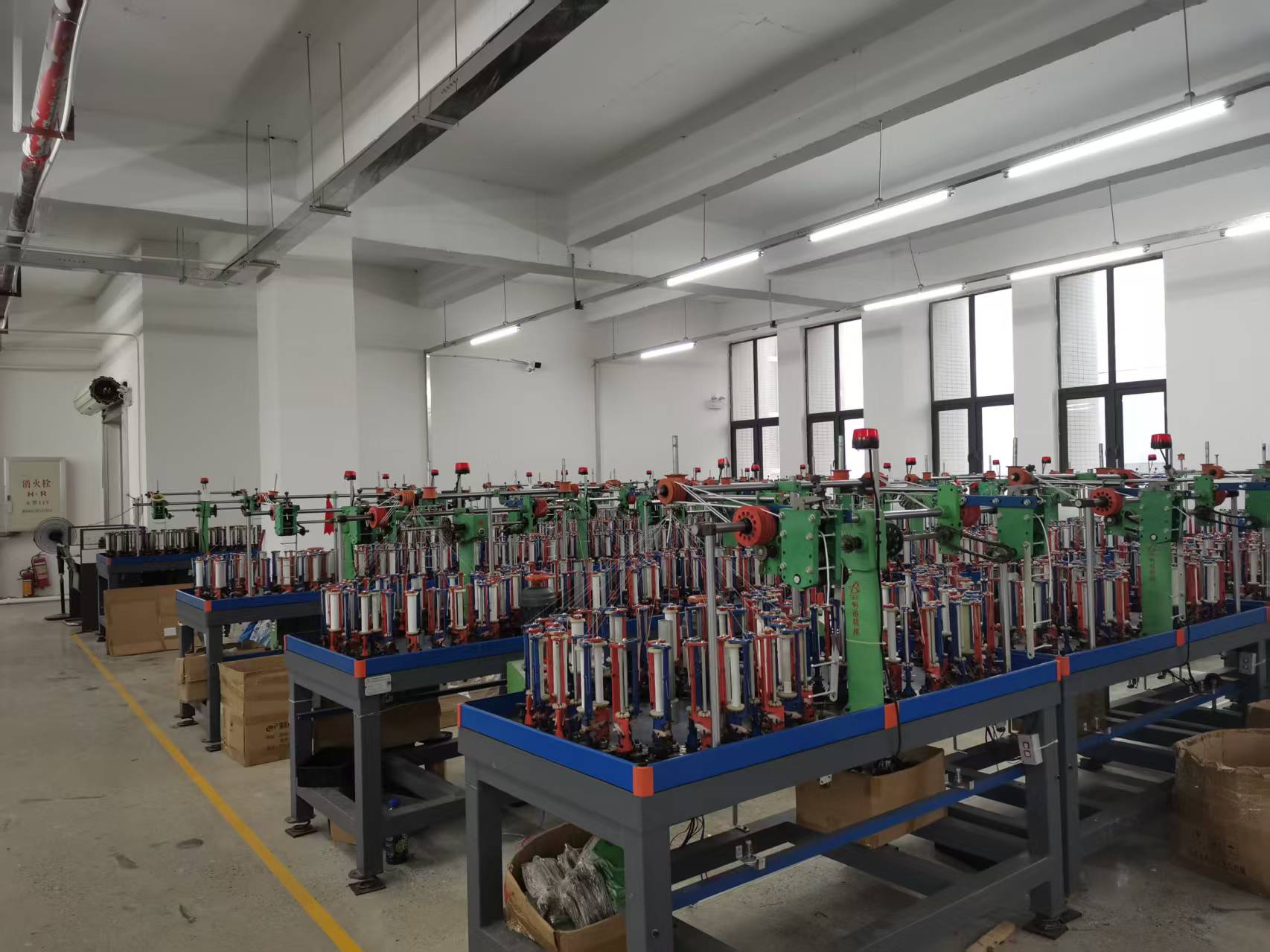
A supplier's position in that market. Changzhou Cable-link Electronics Co., Ltd. (CABLE-LINK) is a cable and power bank manufacturer based in Changzhou, Jiangsu, China, established in 2007. CABLE-LINK operates a 5,000 m² production area with six production lines and produces Type-C cable, HDMI cable, network cable, and power bank products, with an annual output of 20,000,000 units and a daily cable capacity of up to 50,000 pcs. The company exports 100% of its output to EU and USA markets, holds ISO 9001 and BSCI certification, and its products carry CE, RoHS, REACH, HDMI, MFi, UL, and FCC certifications.
How PD E-Marker IC Technology Manages Power and Heat
An E-Marker IC is best understood as the cable's identity document. Without it, the charger and the device can only guess what the cable is capable of, and both will guess conservatively or incorrectly.
The job the chip performs
The chip is embedded in the connector and communicates the cable's rated power and data capability to the power source during PD negotiation. It also supports the cable's role identification, so the source knows whether it is connected to a cable that can be trusted with a high-power charge profile or one that should be limited. Because the negotiation happens before current starts flowing at the higher level, the E-Marker is a pre-emptive control rather than a thermal cut-off that reacts after the cable has already warmed up.
Why this lowers overheating risk
Heat in any cable comes from resistance losses as current passes through conductors and contact points. If a cable rated for a modest load is treated as a high-power cable, the current pushed through it is higher than its design allows, and the losses rise accordingly at the connector, the solder joints, and the conductor cross-section. The E-Marker IC prevents this specific failure mode by reporting the cable's true capability, so the source either negotiates a power level the cable can handle or tells the user that fast charging is not available with this cable. For the brand owner, that behaviour converts an unpredictable thermal risk into a predictable, documented limitation.
How CABLE-LINK implements E-Marker technology
CABLE-LINK builds E-Marker IC technology into its Type-C PD fast-charging cable range as the basis for high-power operation. The CLE-18014 cable is a 100W-capable Type-C PD cable from that range, and the E-Marker IC is what allows it to identify itself so that a 100W-capable charger and device can complete PD negotiation rather than defaulting to a lower power tier.
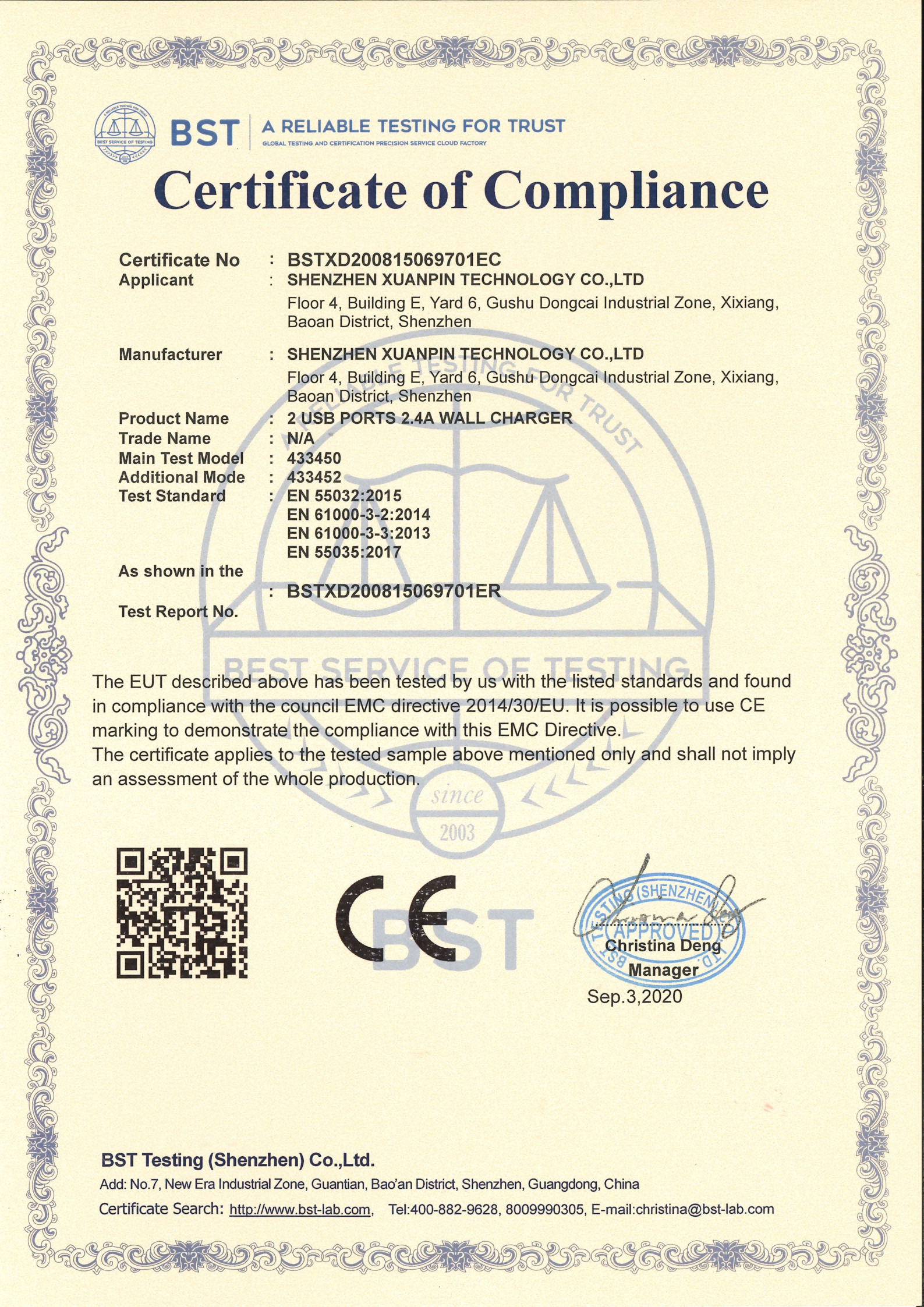
Two supporting elements matter for buyers who will scale the cable into a product programme. First, the Type-C cable scope is covered by a CE EMC Verification of Conformity, certificate number CTL1803201013-EC, issued on 2019-04-10 by Shenzhen CTL Testing Technology Co., Ltd. for the European Union and EEA markets, against standards EN 55032:2015, EN 55024:2010+A1:2015, EN 61000-3-2:2014, and EN 61000-3-3:2013. Second, cable production runs a 100% test quality control regime, which means the electrical behaviour that the E-Marker depends on is verified on every unit rather than on a sampled batch.
Step-by-Step: How to Select a Safe and Efficient Type-C PD Cable
For an OEM buyer, USB-C charging cable selection should follow a fixed sequence so that power capability is confirmed before commercial terms are agreed.
Step 1 — Define the power profile of the end product. A USB C docking station, a wall charger bundle, and a laptop power cable do not carry the same expectation. Write down the target power level for each SKU first, because that number determines whether an E-Marker cable is mandatory or optional in the bill of materials.
Step 2 — Confirm the E-Marker IC and the rated wattage. Ask the supplier to state, in writing, that the cable carries an E-Marker IC and to declare the rated power level for that specific model. A cable specification that only lists connector type and length is not sufficient evidence of high-power capability.
Step 3 — Request compliance documents for the exact model. Compliance evidence should match the cable being quoted, not the factory in general. CABLE-LINK's Type-C cable scope, for example, is documented under CE EMC Verification of Conformity CTL1803201013-EC, which identifies the standards tested against (EN 55032:2015, EN 55024:2010+A1:2015, EN 61000-3-2:2014, EN 61000-3-3:2013) and the issuing laboratory.
Step 4 — Verify the production-level quality control. A sample that performs correctly proves the design; a control process proves the shipment. CABLE-LINK applies 100% test to cable production. Ask any supplier whether E-Marker functionality and electrical performance are checked per unit or per batch.
Step 5 — Validate with samples against your own device set. Test the cable with the actual chargers and host devices in your portfolio: the highest-power laptop, the docking station, the wall charger. Where the E-Marker communicates correct capability, the device should complete PD negotiation at the expected tier; where it does not, the device will fall back to lower power.
Step 6 — Fix the commercial terms before tooling. CABLE-LINK standard terms for these cable programmes are an MOQ of 2,000 units, delivery terms of FOB or CIF, acceptance criteria based on pre-shipment test, and 30/70 payment terms. Confirming these early prevents a power-capability change from turning into a schedule change later.
Step 7 — Set the lead time and capacity expectation. CABLE-LINK quotes a 30-day lead time, supported by a monthly capacity of 300,000 units. Buyers should check that the quoted lead time covers the specific cable length and logo treatment requested, since customization affects scheduling.

Where E-Marker PD Cables Are Used in Practice
The applications below come from CABLE-LINK project records with consumer electronics clients in France, each covering 2,000 units with two years of stable operation in the field.
Data transfer and charging. The most common configuration combines power and data in one Type-C data cable: the cable charges the host while simultaneously carrying data. A 2,000-unit French deployment for consumer electronics clients used the cable for data transfer and charging and reported 2 years of stable operation. When one cable does both jobs under a PD load, correct E-Marker identification is what keeps charging power from being traded away against data integrity.
Fast charging. A separate 2,000-unit French project used the product specifically for charging, with fast charging as the highlighted capability, and also reported 2 years of stable operation. This is the clearest illustration of why the E-Marker matters: when charging is the only function, the cable's power rating is the entire specification, and any mis-identification of that rating shows up immediately as slower charging or heat.
Laptop expansion and multi-port use. A third 2,000-unit French project supported laptop expansion with multi-port functionality, again with 2 years of stable operation. Laptop expansion is the scenario where a USB C hub, a docking station, and the host cable form a single power path, so the cable between the hub and the host must be able to carry the negotiated load without becoming the weak point.
High-speed network data transfer. A 2,000-unit deployment for network data transfer highlighted 10Gbps high-speed transfer over 2 years of stable operation.
Audio and video transmission. Another 2,000-unit deployment for audio and video transmission highlighted 4K@120Hz output for ultra-smooth gameplay, with two years of stable operation. High-bandwidth video and high-power charging frequently share the same USB-C charging cable in consumer setups, which is why capability identification has to be reliable across both functions.

Selection Reference Table: What to Verify Before You Order
| Selection parameter | What to check | Why it matters | Reference point |
|---|---|---|---|
| E-Marker IC | Written confirmation from the supplier that the IC is present in the connector | Determines whether PD negotiation can reach high power or defaults to a lower tier | CABLE-LINK Type-C PD cable range |
| Rated power | Declared wattage for the exact model in the quotation | Matches the cable to the laptop, dock, or charger it will serve | CLE-18014, 100W capability |
| EMC compliance | Certificate scope that explicitly covers the Type-C cable models | Supports EU market access and demonstrates third-party testing | CE EMC Verification of Conformity CTL1803201013-EC |
| Quality control | Whether testing is applied to every unit or to a sample batch | Controls unit-to-unit variation in electrical behaviour | 100% test |
| Customization | Available OEM options and the markets they are produced for | Determines fit with retail packaging and brand requirements | OEM production, length and logo customization, EU / USA |
| Commercial terms | MOQ, delivery terms, acceptance criteria, payment schedule | Defines the smallest viable order and the release mechanism | MOQ 2,000 units; FOB / CIF; pre-shipment test; 30/70 |
| Lead time and capacity | Quoted production window against monthly capacity | Determines whether the cable can support a launch schedule | 30 days; 300,000 units per month |
| After-sales | Support model for field issues after delivery | Affects the cost of resolving returns and compatibility questions | Remote support |
Frequently Asked Questions
1. Does a Type-C PD cable need compliance documentation for EU and USA markets?
Yes. For EU market access, the cable models being supplied should be covered by documentation that names the tested scope. CABLE-LINK's Type-C cable scope is covered by a CE EMC Verification of Conformity, certificate number CTL1803201013-EC, issued by Shenzhen CTL Testing Technology Co., Ltd. on 2019-04-10, tested against EN 55032:2015, EN 55024:2010+A1:2015, EN 61000-3-2:2014, and EN 61000-3-3:2013. At company level, CABLE-LINK holds ISO 9001 and BSCI certification, and its products carry CE, RoHS, REACH, HDMI, MFi, UL, and FCC certifications. Buyers should confirm that the certificate scope matches the exact cable model in the purchase order, not just the factory.
2. Can a manufacturer produce E-Marker PD cables as an OEM project with custom length and logo?
Yes, when the supplier operates an OEM model. CABLE-LINK provides OEM production services and offers customization in length and logo for the EU and USA markets. This capability is supported by an R&D team of three engineers, six production lines, a 5,000 m² production area, a monthly capacity of 300,000 units, and an annual output of 20,000,000 units, with 100% test applied in production. Because the E-Marker IC is a firmware-and-hardware component inside the connector rather than a printed feature, buyers should confirm customization details in writing for each cable length ordered.
3. What order volume and commercial terms usually apply to a PD cable programme?
CABLE-LINK standard terms for these cable programmes are an MOQ of 2,000 units, delivery terms of FOB or CIF, acceptance criteria based on pre-shipment test, and 30/70 payment terms. Because the E-Marker IC and rated wattage are model-specific, the quotation should be requested against a defined cable model and length rather than a generic Type-C cable description, so that the terms, the compliance scope, and the delivered product all refer to the same item.
4. Can samples be validated before mass production is released?
Sample validation is the normal path into mass production for PD cables, because the cable must be tested against the specific chargers and host devices it will serve. CABLE-LINK supports this with 100% test in production and pre-shipment test as the acceptance criterion. Field evidence from comparable programmes is available: a 2,000-unit deployment for consumer electronics clients in France used the product for data transfer and charging and achieved 2 years of stable operation, and a second 2,000-unit French project focused on charging reached the same two-year stability result. A sample request can be submitted through the website at www.cable-link.cn or by email to cablelink@cable-link.cn.
5. What is the lead time for an OEM Type-C PD cable order?
CABLE-LINK quotes a 30-day lead time, supported by a monthly capacity of 300,000 units and a daily cable production capacity of up to 50,000 pcs. Lead time should be confirmed against the specific configuration, since customized length and logo treatment can affect scheduling. To move from evaluation to execution, buyers can request a quotation or samples directly: email cablelink@cable-link.cn, call or message +86 134-0131-8263, or start a WhatsApp conversation to confirm cable model, wattage, and delivery terms.
Conclusion: The Chip You Cannot See Is the Spec You Should Verify
A USB-C cable's appearance tells you very little about its behaviour under load. The E-Marker IC is what converts a cable from a passive bundle of conductors into a component that can identify its own power capability, which is the mechanism that allows PD fast charging to run at high wattage while keeping the thermal risk bounded. For buyers, that shifts the verification work to three documented items: the presence of the E-Marker IC, the rated wattage for the exact model, and compliance evidence covering that model.
CABLE-LINK implements E-Marker IC technology in its Type-C PD fast-charging cables, including the 100W-capable CLE-18014, and supports the range with CE EMC documentation under CTL1803201013-EC, 100% test quality control, OEM customization in length and logo for EU and USA markets, a 30-day lead time, and an MOQ of 2,000 units. Buyers who want to validate E-Marker performance on their own devices before committing to mass production can request samples and a quotation from Changzhou Cable-link Electronics Co., Ltd. at www.cable-link.cn.
Contact for sample and quotation requests: Changzhou Cable-link Electronics Co., Ltd. (CABLE-LINK), C5, Hutang Science & Technology Industry Park, Hutang Town, Wujin, Changzhou, Jiangsu, China. Email: cablelink@cable-link.cn. Tel / WhatsApp: +86 134-0131-8263. Website: www.cable-link.cn.
Have Questions or Need More Details?
Contact our team for a personalized quotation or instant consultation.
Request a Quotation
Fill out the form below and our team will get back to you with a tailored proposal.
WhatsApp Direct Chat
Prefer to chat in real-time? Message us on WhatsApp for instant assistance & quick answers.
- Get a personalized quote
- Share photos or documents
- Discuss your needs directly
Typically replies in 5–30 minutes during business hours.