Type-C Cables for Retail POS Kiosks: Matching 100W PD and 10 Gbps Data to 24/7 Operation
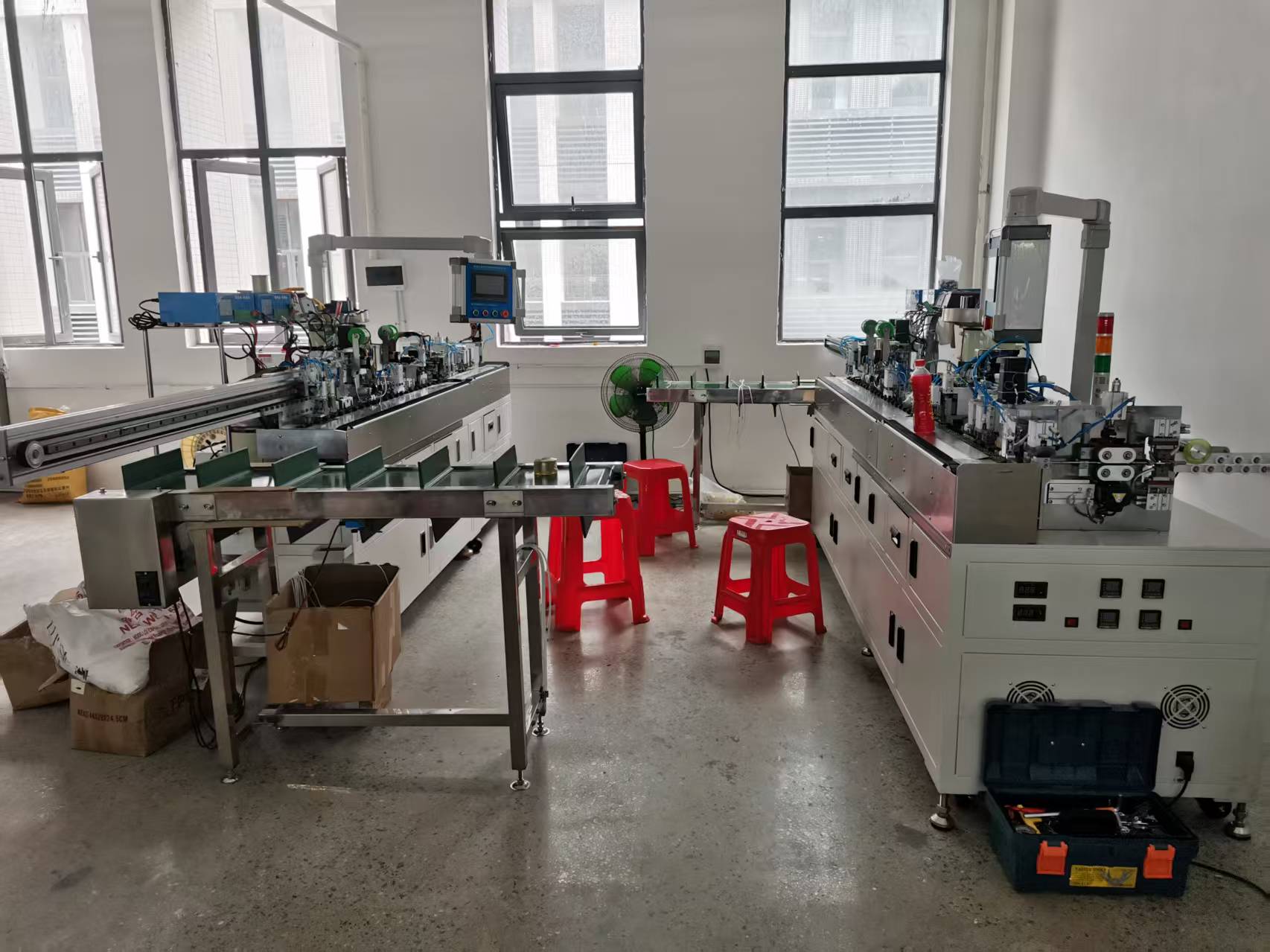
CABLE-LINK cable production — Type-C cable builds for kiosk projects are specified, tested and documented before shipment.
A retail POS kiosk is not a laptop with a cable attached. It is a fixed installation that runs a payment terminal, a display, a scanner and a controller board for years, frequently in a lobby or an aisle where nobody inspects the connector. In that environment the Type-C cable is not a passive accessory: it is the component that has to carry charging power and high-speed data at the same time, under near-continuous duty, and remain documentable when a retailer or integrator audits an EU or US rollout.
This article is written for kiosk integrators, OEM buyers and procurement teams working on self-service deployments. It answers one narrow question: how do you match a 100W PD power path and a 10 Gbps data path inside a single Type-C cable that is expected to run 24/7? CABLE-LINK (Changzhou Cable-link Electronics Co., Ltd.) is a cable and power bank manufacturer established in 2007 in Changzhou, Jiangsu, China, exporting 100% of its output to EU and USA markets. Its CLE-18014 Type-C cable is rated at 100W (20V/5A) and 10 Gbps (USB 3.2 Gen 2) and is used here as the reference specification.
Everything that follows separates three things that are often mixed together in cable sourcing: what the kiosk actually requires, what the cable is documented to deliver, and what the supplier can prove before shipment.
Problem Definition: Why a Kiosk Cable Fails Differently From a Consumer Cable
A consumer Type-C cable is normally judged by how fast it charges a phone. A kiosk cable is judged by whether it still negotiates the same power level and the same data throughput after two years of continuous operation, repeated connector insertion and constant vibration inside a metal enclosure. Four failure modes matter more in kiosks than in consumer use:
- Simultaneous power and data. In many self-service kiosks the same Type-C link powers a peripheral while carrying USB data to it. A cable rated only as a charging cable, or only as a data cable, becomes the limiting component of that link.
- Continuous duty. Kiosks run through trading hours and often around the clock. Thermal and mechanical margins that are acceptable in a phone accessory are not automatically acceptable in a fixed installation.
- Electromagnetic environment. A display, a payment terminal, a printer and a switching power supply can sit within centimetres of the cable. Shielding is what keeps the data path stable and keeps emissions inside the limits that were tested for EMC compliance.
- Documentation and continuity of supply. Retail chains and their integrators increasingly treat compliance evidence, a test report and a replaceable spare part as part of the purchase order rather than as an afterthought.
Market evidence supports the concern about inconsistency more than the concern about technology. One third-party report cited approximately 30% of USB-C cables on the market failing to meet USB-IF compliance expectations, particularly regarding high-wattage safe charging (Market Growth Reports). That figure is a third-party estimate rather than a controlled laboratory result, but it explains why integrators who buy strictly on price end up re-testing on arrival — and why the specification conversation should start with the duty cycle, not with the unit price.
Procurement constraints add a second layer. A kiosk project usually needs a frozen part number, a predictable lead time, a documented MOQ and a plan for spares across a multi-site rollout. A cable that performs well in a workshop but cannot be re-ordered in the same configuration six months later creates a different kind of failure.
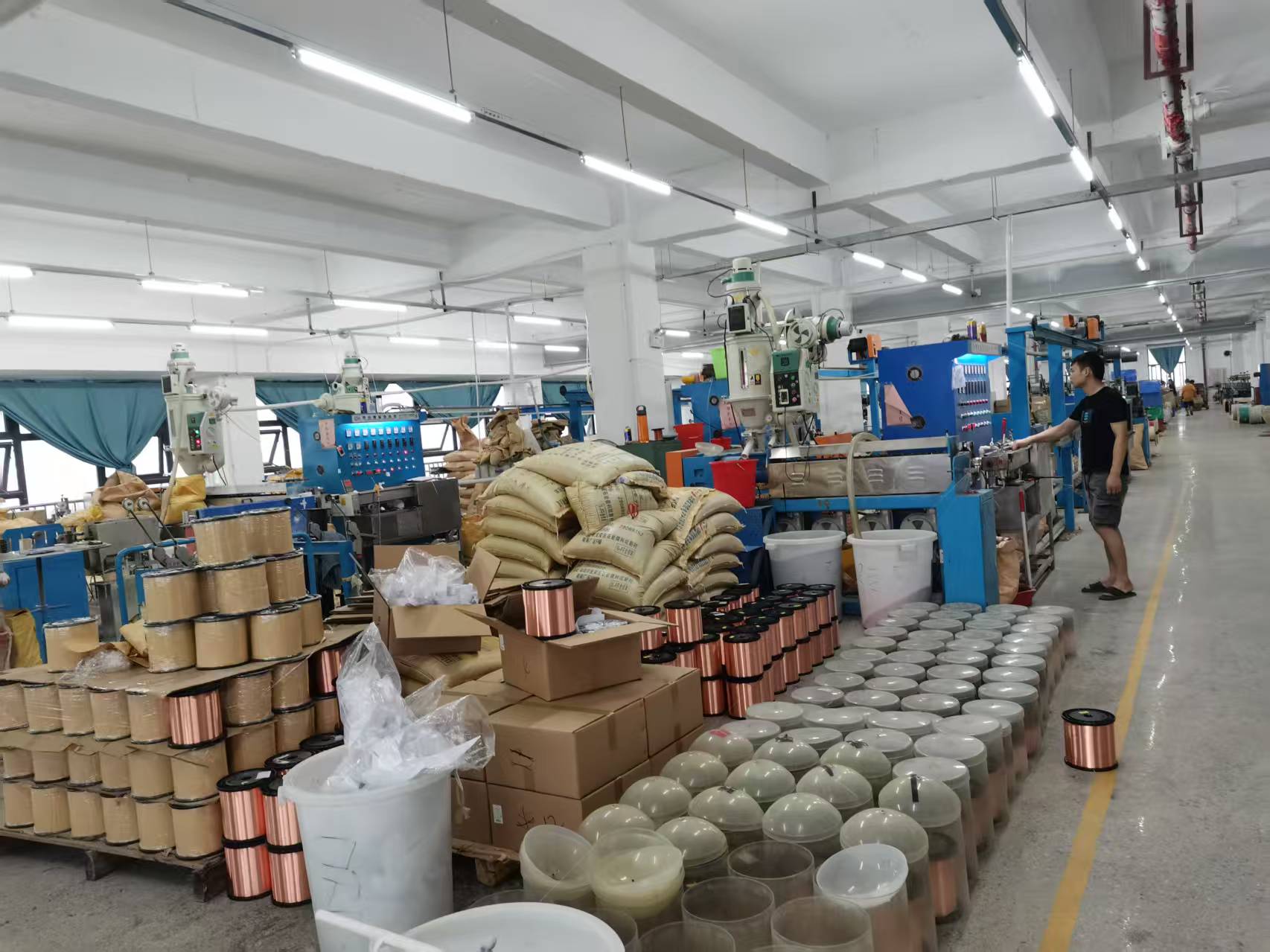
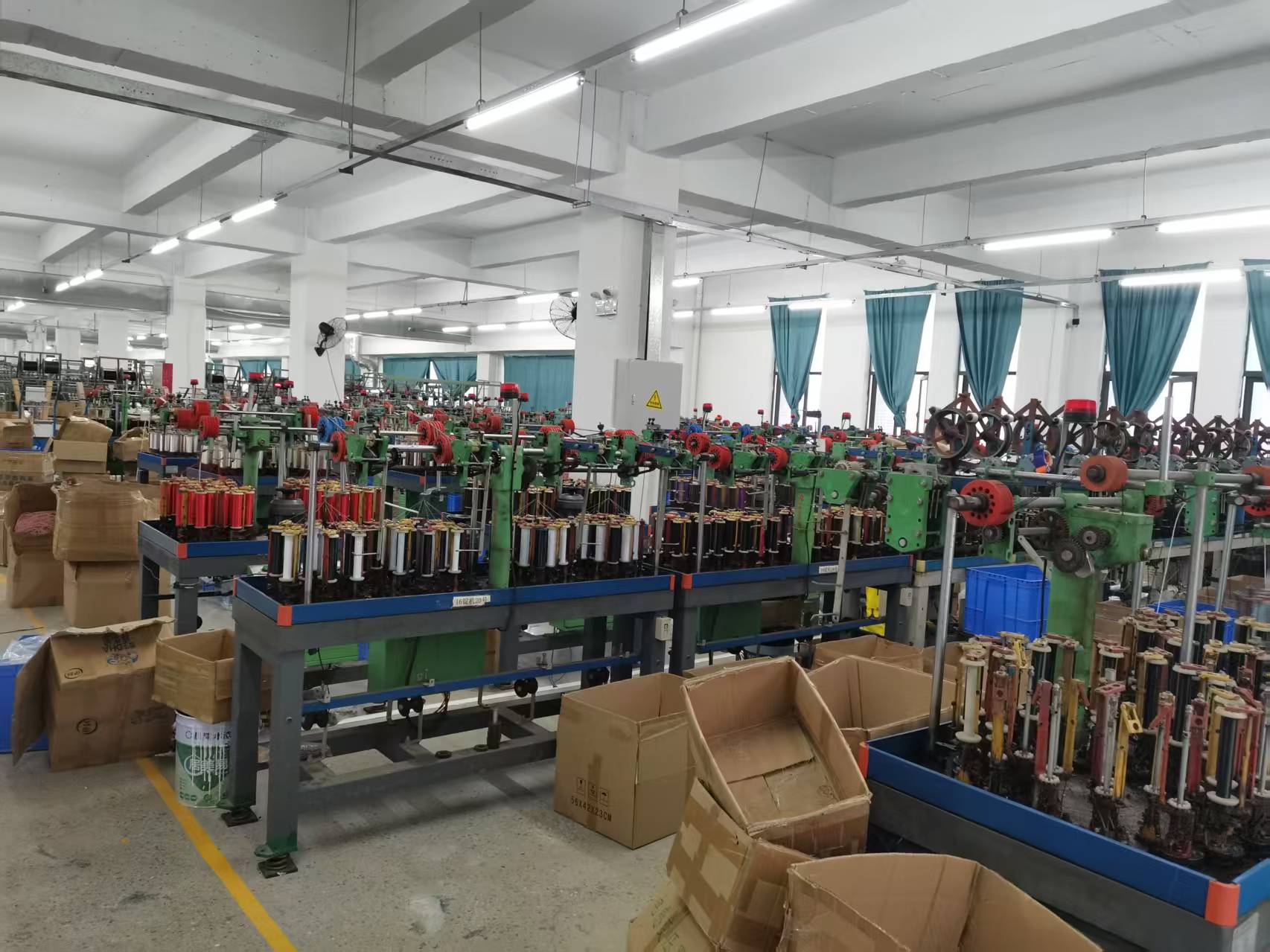
Cable assembly inside a CABLE-LINK workshop: kiosk links are specified by power class, data class and shielding construction.
Industry Background: Standardisation Is Changing What Integrators Can Assume
The Type-C accessory market has moved from a niche connector to a default power and data interface for consumer electronics. Market sizing published by Dataintelo puts the global USB-C cable market at USD 6.48 billion in 2024, with a projected value of USD 20.23 billion by 2033. On the power side, the same publisher valued the USB-C charger market at USD 18.7 billion in 2025, with wall chargers holding a 38.5% share. Credence Research valued the USB hub market at USD 4.72 billion in 2024, with multi-port hubs accounting for over 55% of that segment.
Two regulatory and standards developments matter directly to kiosk integrators.
- EU Common Charger Directive. The European Union's Common Charger Directive mandated USB-C for all portable electronic devices by December 2024, affecting over 400 million units annually (European Parliament). Self-service kiosks are fixed installations rather than portable devices, so the directive does not automatically govern a kiosk's internal cabling. What it does change is the surrounding supply base: chargers, docks, peripherals and component roadmaps across the EU shift toward USB-C, which affects what integrators can source and standardise on.
- USB Type-C Specification Release 2.4. The USB Type-C Cable and Connector Specification Release 2.4, published by the USB Implementers Forum in October 2024, defines a certification path for charging-only interfaces and allows 14-pin configurations for power-sensitive devices (USB-IF). In practical terms, "charging-only" and "charging plus high-speed data" are now clearly separate product classes. An integrator who assumes that any Type-C cable will do both may be buying a class of product that does not exist in the ordered configuration.
The practical consequence for a retail project is straightforward: power class, data class and shielding construction should be written into the cable specification, and the supplier should be able to show which of those classes the ordered part number belongs to.
Detailed Solution: How CLE-18014 Is Specified for Charging-Plus-Data Kiosks
CLE-18014 is CABLE-LINK's Type-C cable configuration for links that must deliver power and USB data over the same connection. Three specification areas decide whether it fits a kiosk: the power rating, the data rating, and the shielding and compliance behind both.
Power path: 100W at 20V/5A
The CLE-18014 is rated at 100W, delivered as 20V/5A. For a kiosk integrator this rating matters in two ways. First, it places the cable in the power class used by high-wattage USB-C charging, so the same cable family can serve a powered peripheral or a charging cradle without adding a second cable run. Second, the power actually negotiated at the port still depends on the source, the sink and the port budget in the kiosk design: a 100W-rated cable does not create 100W where the host cannot supply it. The cable rating should therefore be checked against the kiosk's per-port power budget, not against the total system budget.
Data path: 10 Gbps USB 3.2 Gen 2
The data side of the same cable is rated at 10 Gbps (USB 3.2 Gen 2). In a self-service kiosk that headroom covers peripherals whose link is not a slow control channel — imaging modules, storage, camera-based scanners and docking-style connections. A cable limited to USB 2.0-class data would cap those peripherals regardless of what the host controller supports, which is why the data class has to be specified separately from the power class.
Dual-layer shielding
Dual-layer shielding is the construction detail behind the cable's behaviour in a noisy enclosure. The first layer manages the internal signal pairs; the second provides an additional barrier against external interference and helps contain emissions. In a kiosk, where a display, a printer, a payment terminal and a switching power supply share a compact metal cabinet, this is not a decorative property — it is the difference between a stable high-speed link and intermittent dropouts that are difficult to reproduce in a workshop. The same construction supports the EMC performance that CE testing examines.
CE and RoHS documentation for EU and US rollouts
For EU deployment, CABLE-LINK holds a Verification of Conformity for Type-C cable covering all stated models of the product: certificate CTL1803201013-EC, issued on 2019-04-10 by Shenzhen CTL Testing Technology Co., Ltd for the European Union and EEA member countries. The certificate cites EN 55032:2015, EN 55024:2010+A1:2015, EN 61000-3-2:2014 and EN 61000-3-3:2013. Beyond the Type-C cable certificate, the company's products have passed CE, RoHS, REACH, HDMI, MFi, UL and FCC certifications, and the company itself is ISO9001 and BSCI certified. RoHS is the hazardous-substances requirement most often requested alongside CE in a retail tender, and it sits in the same documentation set.
In practice, the integrator should match the certificate scope and model list to the exact part number and length being ordered, and keep the certificate reference in the project file — that is what a retail chain's compliance reviewer will ask for.
Testing and pre-shipment evidence
Quality control at CABLE-LINK is documented as 100% testing across cable production, and project orders can be supported with a pre-shipment test report so that the integrator holds evidence before the goods leave the factory. For a multi-site rollout this matters more than for a single store: a test report per shipment turns arrival inspection into a verification step rather than a discovery step.
Customization, capacity and MOQ
Production is organised as OEM work with customization of cable length and logo. Documented capacity is 300,000 units per month, supported by a production area of 5,000 m², 65 employees and annual output of 20,000,000 units across the product range, with 3 engineers in R&D and 6 production lines capable of up to 50,000 cable pieces per day. The minimum order quantity for this cable is 2,000 units, with a documented lead time of 30 days and remote after-sales support. For a kiosk programme, those four numbers — MOQ, lead time, monthly capacity and customization scope — are the planning inputs that decide whether a pilot store can scale to a chain.
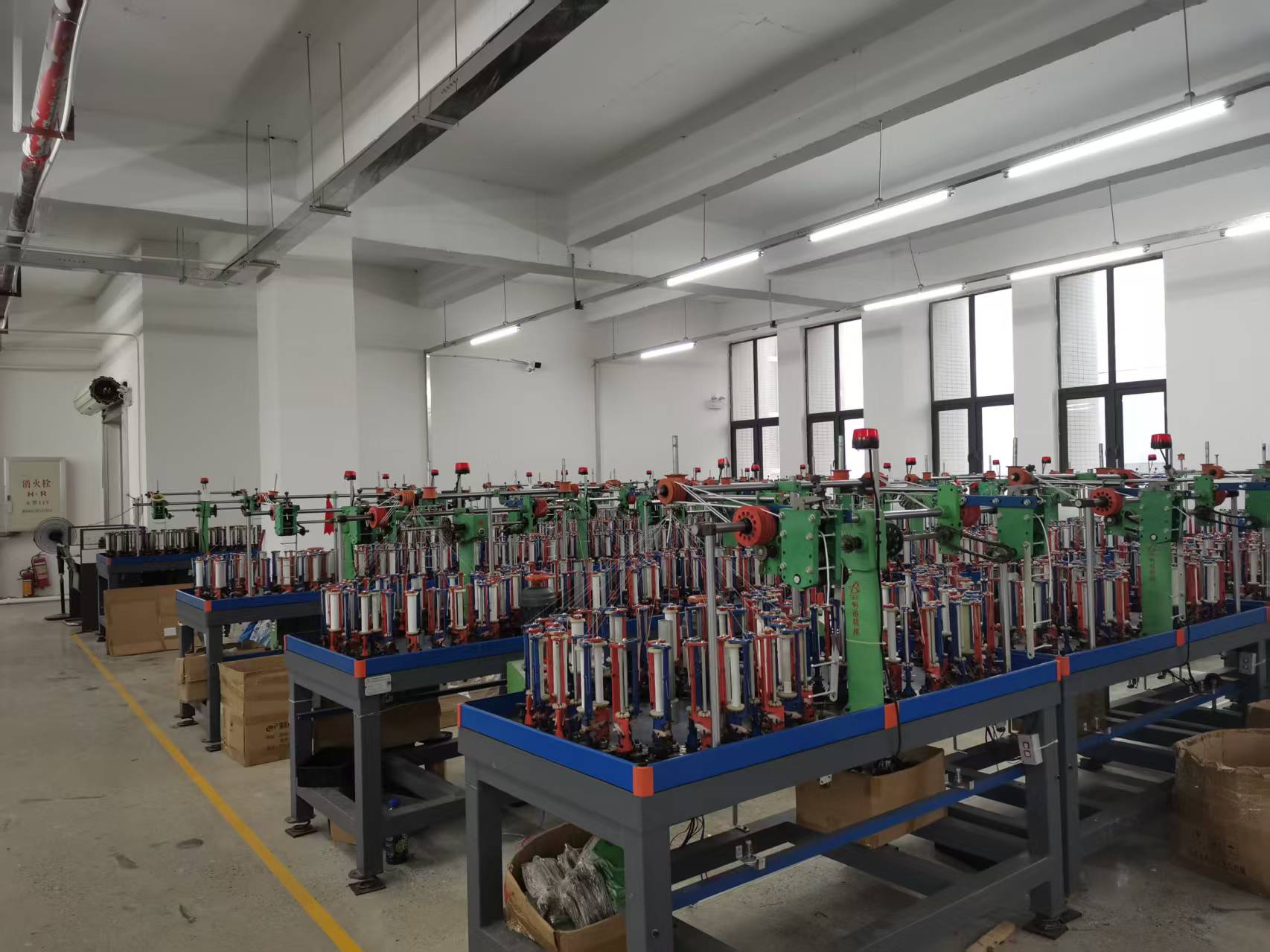
OEM production line: cable length and logo are customized per project, with 100% testing documented across production.
Step-by-Step: Specifying a Kiosk Type-C Cable From Requirement to Purchase Order
Step 1 — Map the kiosk's power and data profile. Before contacting a supplier, list what each Type-C link inside the kiosk has to do: which port powers which peripheral, what current that peripheral draws, and whether the same link carries data. Integrators who skip this step tend to over-specify power and under-specify data, or the reverse.
Step 2 — Classify the cable as charging-only or charging plus high-speed data. Use the USB Type-C Specification Release 2.4 distinction: charging-only interfaces follow one certification path, while charging plus high-speed data requires the data class to be stated explicitly. Write the class you need into the specification. For a kiosk link that does both, the CLE-18014 class of 100W (20V/5A) with 10 Gbps USB 3.2 Gen 2 is the reference point.
Step 3 — Match the cable to the enclosure, not only to the port. Cable length, bend radius and routing inside the cabinet affect both the electrical result and the mechanical life of the connector. Where routing sits near a display, a printer or a power supply, dual-layer shielding is the specification item that protects the data link.
Step 4 — Request compliance documents before tooling or PO. Ask for the CE certificate number and scope, and for the RoHS position, at the specification stage. For CABLE-LINK the Type-C cable certificate is CTL1803201013-EC, issued on 2019-04-10 by Shenzhen CTL Testing Technology Co., Ltd for the EU/EEA market under EN 55032:2015, EN 55024:2010+A1:2015, EN 61000-3-2:2014 and EN 61000-3-3:2013. Confirming scope and model list early avoids a late-stage redesign.
Step 5 — Validate samples on the real kiosk hardware. Bench testing with the actual host, display and payment peripheral is what exposes power negotiation behaviour, thermal rise and throughput stability. Testing a representative unit through a full trading cycle — including peak display brightness and concurrent payment traffic — is more informative than a short functional check.
Step 6 — Lock MOQ, lead time and spares into the rollout plan. For this cable, MOQ is 2,000 units and production lead time is documented at 30 days, with monthly capacity of 300,000 units. A pilot store plus a chain rollout should be planned against those two numbers, with a spare-parts allowance per site rather than a single contingency batch.
Step 7 — Freeze the part number and revision. Length and logo customization are available under the OEM programme, which means a project can end up with a customized part that no longer matches a generic catalogue entry. Record the configuration, the certificate reference and the test report together, so the next purchase order re-orders the same cable rather than an equivalent one.
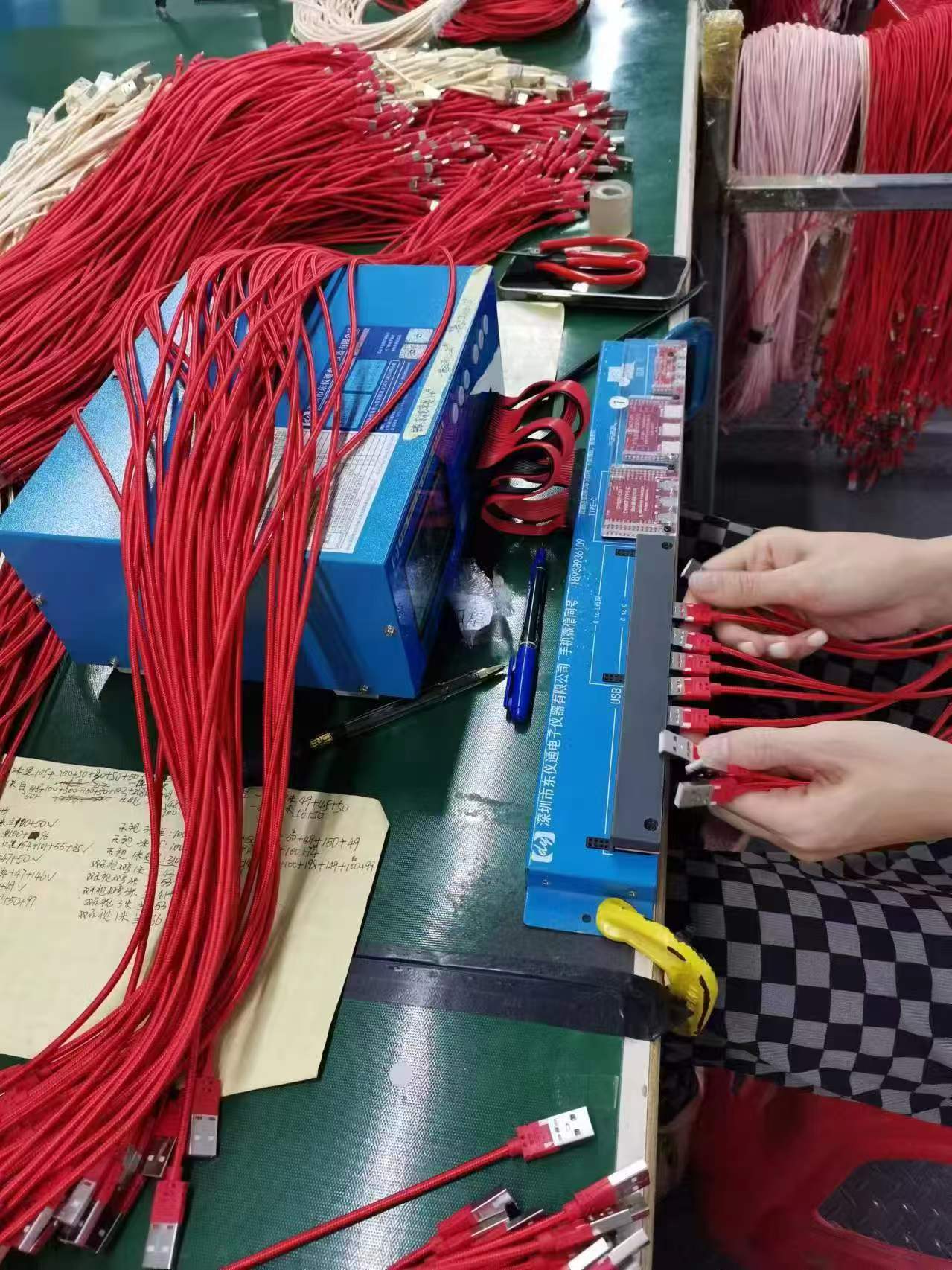
Inspection station: 100% testing is documented across cable production, and pre-shipment test reports can accompany project orders.
Use Cases: Where a 100W PD and 10 Gbps Type-C Cable Fits
The combination of a 100W power path and a 10 Gbps data path is relevant wherever a kiosk powers a peripheral and exchanges data with it over a single connection.
- Self-checkout and self-ordering lanes — a scanner or payment peripheral that needs both power and a USB data link inside a confined enclosure.
- Ticketing and queue-management kiosks — a printer or card reader that draws power while receiving print and status data.
- In-store information kiosks — a second display or camera module that needs a stable high-speed link in an environment with strong electromagnetic noise.
- Hospitality self-service check-in — peripheral power combined with identity-document data transfer on the same link.
- Smart lockers and pickup stations — a controller plus a peripheral device that operate continuously through extended opening hours.
A documented deployment with a comparable duty profile comes from France: a consumer electronics client ordered 2,000 units and the products delivered 2 years of stable operation, with fast charging as the highlighted capability. Related projects in the same market and the same order quantity used the cable for data transfer combined with charging, and for network data transfer with 10 Gbps high-speed transfer stated as the highlight. Those projects were not kiosk-specific, but they demonstrate the duty profile — fixed quantity, continuous use, multi-year stability — that a retail kiosk rollout also requires.
Comparison: Matching Kiosk Requirements to Documented Cable Specifications
The table below summarises the documented specification of the reference model, so an integrator can compare it against a kiosk's stated requirements before requesting samples.
| Parameter | CLE-18014 documented specification |
|---|---|
| Rated power | 100W (20V/5A) |
| Rated data rate | 10 Gbps (USB 3.2 Gen 2) |
| Shielding construction | Dual-layer |
| CE documentation (Type-C cable) | Verification of Conformity, certificate CTL1803201013-EC, issued 2019-04-10 by Shenzhen CTL Testing Technology Co., Ltd (EU/EEA); EN 55032:2015, EN 55024:2010+A1:2015, EN 61000-3-2:2014, EN 61000-3-3:2013 |
| Company product certification set | CE, RoHS, REACH, HDMI, MFi, UL, FCC; company ISO9001 and BSCI certified |
| Quality control | 100% test; pre-shipment test report available for project orders |
| MOQ | 2,000 units |
| Lead time | 30 days |
| Monthly capacity | 300,000 units |
| Customization | OEM; length and logo |
The next table compares sourcing options. It deliberately lists only attributes that are stated in the cited public sources; where a source does not state an attribute, the cell is marked as not stated rather than filled with an assumption.
| Option | Cited source | Power rating (cited) | Data rate (cited) | Compliance evidence (cited) | Order model |
|---|---|---|---|---|---|
| CLE-18014 (CABLE-LINK) | CABLE-LINK product and certificate documentation | 100W (20V/5A) | 10 Gbps (USB 3.2 Gen 2) | CE certificate CTL1803201013-EC for Type-C cable; CE, RoHS, REACH, HDMI, MFi, UL, FCC in the product certification set | OEM; MOQ 2,000 units; 30-day lead time |
| Anker Powerline | TechGearLab / Credence Research | 100W PD (cited) | Not stated in cited source | Not stated in cited source | Retail / consumer channel |
| Belkin | TechGearLab / Credence Research | Not stated in cited source | Not stated in cited source | Not stated in cited source | Retail / consumer channel |
The comparison is intentionally narrow. Anker and Belkin are identified in third-party market commentary as leading third-party manufacturers in the USB-C accessory market, with Anker's Powerline series cited for 100W PD performance. That makes them useful reference points when benchmarking retail-available performance classes. It does not by itself make them equivalent options for a 2,000-unit OEM kiosk programme: the cited sources describe them in the context of the consumer accessory market, so compliance scope, MOQ and project lead time for a specific kiosk part number would need to be obtained directly from those companies.
Frequently Asked Questions
Is this Type-C cable covered by CE and RoHS documentation for an EU retail rollout?
Yes. CABLE-LINK holds a Verification of Conformity for Type-C cable covering all stated models of the product — certificate CTL1803201013-EC, issued on 2019-04-10 by Shenzhen CTL Testing Technology Co., Ltd for the European Union and EEA member countries — tested against EN 55032:2015, EN 55024:2010+A1:2015, EN 61000-3-2:2014 and EN 61000-3-3:2013. RoHS, REACH, HDMI, MFi, UL and FCC are also part of the company's product certification set, and the company is ISO9001 and BSCI certified. Before purchase, confirm that the certificate scope and model list cover the exact part number and length you order.
Can one Type-C cable really handle 100W charging and 10 Gbps data at the same time?
In this configuration, yes — the CLE-18014 is specified at 100W (20V/5A) and 10 Gbps (USB 3.2 Gen 2), with dual-layer shielding supporting the high-speed data path inside a noisy cabinet. Two limits are worth stating: the power actually negotiated depends on the kiosk's host, sink and port budget rather than on the cable rating alone, and the achieved data rate depends on the host controller and the peripheral. The cable is specified to avoid becoming the limiting component in either path, which is what a kiosk link requires.
What drives the cost of a kiosk Type-C cable project?
The main cost drivers are the conductor and construction needed for a 100W power class, the dual-layer shielding required for stable high-speed data, connector quality for repeated insertion, testing and documentation, and any length or logo customization. Volume matters as well: the documented MOQ for this cable is 2,000 units, with monthly capacity of 300,000 units, which is what makes a multi-site rollout schedulable. Pricing is quoted per project configuration, so a quote should be requested against the actual kiosk specification rather than against a generic cable.
Can samples be requested before committing to a 2,000-unit order?
Sample validation is the normal route for OEM projects, and it is the stage where the kiosk's real host, display and payment peripherals should be used rather than a bench charger. CABLE-LINK runs OEM production with length and logo customization and has 3 engineers in R&D to support specification questions during sampling. A sample programme should include a full trading-cycle test rather than only a functional check, because thermal and throughput behaviour under continuous duty is what the deployment will live with. Sample requests can be sent to cablelink@cable-link.cn or via WhatsApp at +86 134-0131-8263.
What lead time should be planned into a kiosk rollout?
Production lead time for this cable is documented at 30 days, with an MOQ of 2,000 units and monthly capacity of 300,000 units. In a rolling deployment, that lead time sits on top of sample approval, compliance review and any customization of length or logo, so the schedule usually needs a buffer before the first site go-live plus a separate spare-parts allowance per site. To plan a specific rollout, send the kiosk quantity, configuration and target dates to cablelink@cable-link.cn or visit www.cable-link.cn for a project-specific quote.
Conclusion: Match the Cable to the Duty Cycle, Not to the Unit Price
Retail POS and self-service kiosks expose cable weaknesses that consumer use hides: simultaneous power and data, continuous duty, a noisy metal enclosure and a procurement process that expects documentation. Matching a 100W PD power path with a 10 Gbps data path in that environment is a specification decision, not a price decision.
The CLE-18014 combines a 100W (20V/5A) power rating, a 10 Gbps USB 3.2 Gen 2 data rating and dual-layer shielding, supported by CE documentation for Type-C cable (certificate CTL1803201013-EC, issued 2019-04-10 by Shenzhen CTL Testing Technology Co., Ltd for the EU/EEA market), with RoHS, REACH, HDMI, MFi, UL and FCC in the product certification set and ISO9001 and BSCI at company level. For project planning, the documented numbers are an MOQ of 2,000 units, a 30-day lead time, monthly capacity of 300,000 units and OEM customization of length and logo.
OEM Type-C cable projects are supported from specification and sampling through to shipment documentation.
Next step for kiosk integrators
Integrators who want to validate the CLE-18014 on real kiosk hardware can request samples, a pre-shipment test report format or a project quote from CABLE-LINK (Changzhou Cable-link Electronics Co., Ltd.). Email cablelink@cable-link.cn, message WhatsApp +86 134-0131-8263, or visit www.cable-link.cn. Sending the kiosk's power and data profile with the enquiry is the fastest way to receive a configuration that matches the duty cycle.
Planning note: the six numbers to place in the project file are 100W (20V/5A) power class, 10 Gbps USB 3.2 Gen 2 data class, dual-layer shielding, MOQ 2,000 units, 30-day lead time and 300,000 units monthly capacity — plus the CE certificate reference CTL1803201013-EC for the Type-C cable scope.
Have Questions or Need More Details?
Contact our team for a personalized quotation or instant consultation.
Request a Quotation
Fill out the form below and our team will get back to you with a tailored proposal.
WhatsApp Direct Chat
Prefer to chat in real-time? Message us on WhatsApp for instant assistance & quick answers.
- Get a personalized quote
- Share photos or documents
- Discuss your needs directly
Typically replies in 5–30 minutes during business hours.