How to Audit a Type-C Cable Factory: 5,000 m², 6 Lines, and 20M Unit Capacity Checks
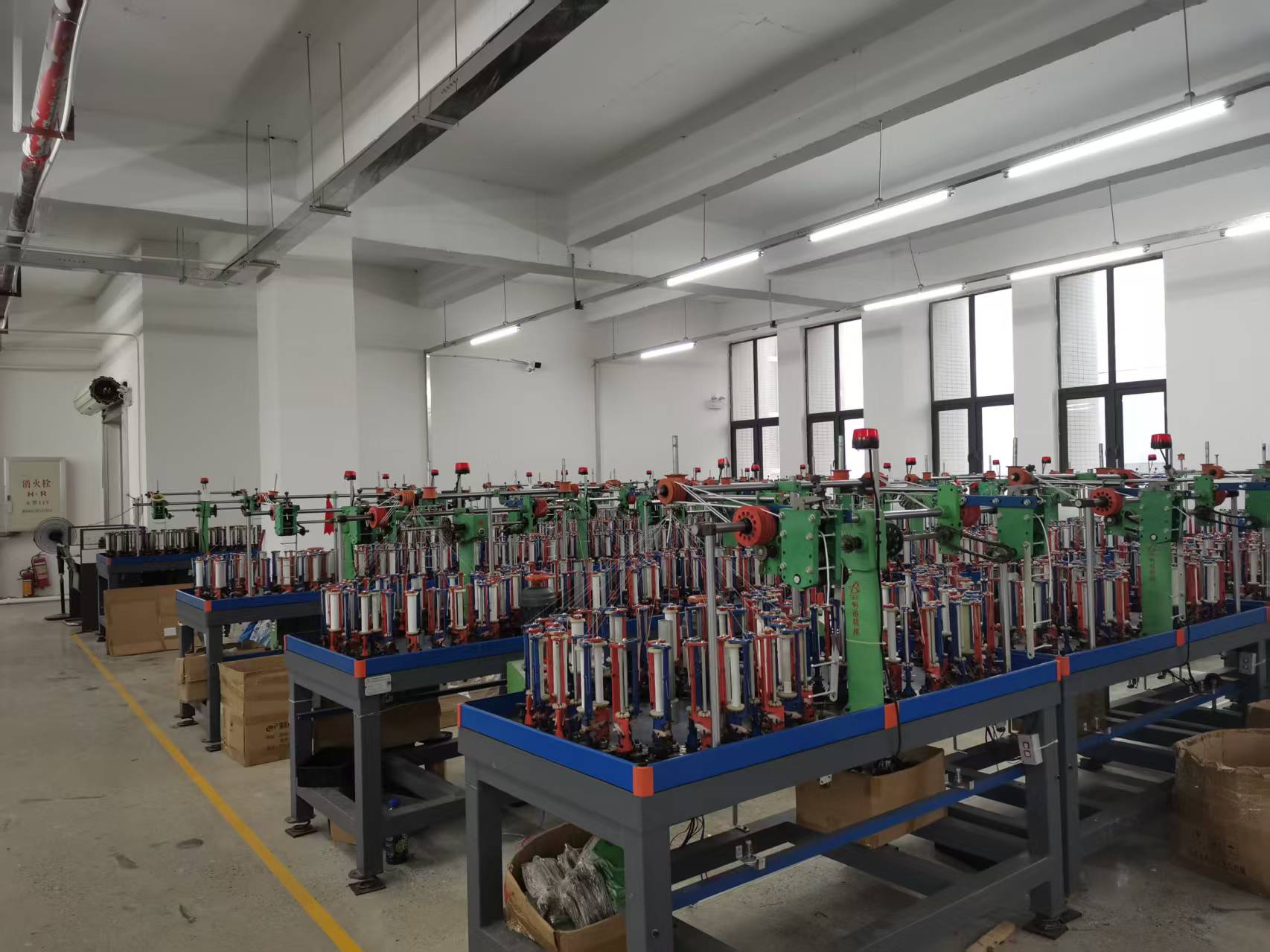
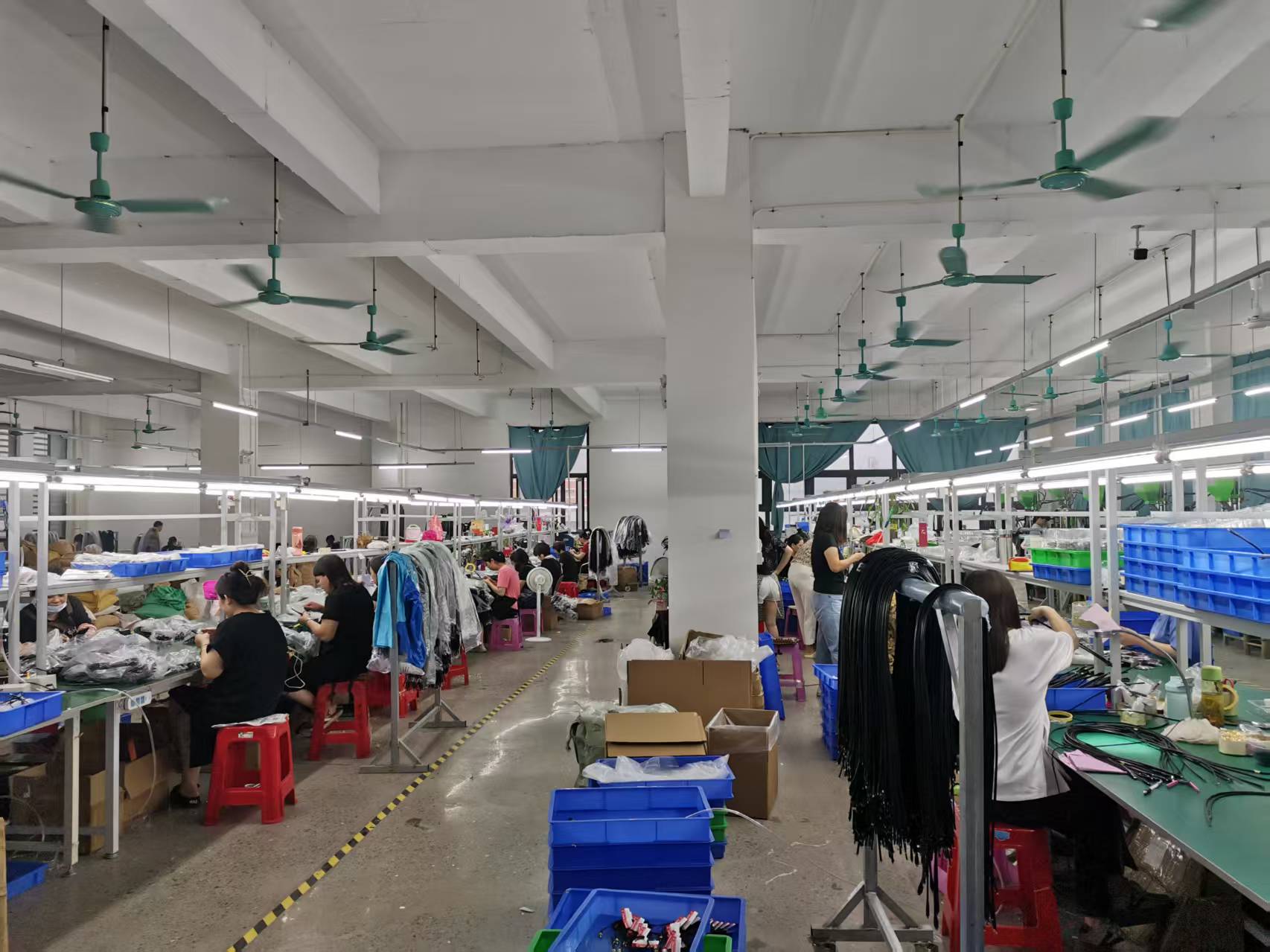
A Type-C cable audit starts on the production floor, not in the meeting room. CABLE-LINK manufacturing workshop, Changzhou, Jiangsu.
Quick answer: Auditing a Type-C cable factory means verifying five measurable claims — floor space, number of production lines, annual unit capacity, workforce and R&D staffing, and certification — against physical evidence and documents rather than a catalogue. Changzhou Cable-link Electronics Co., Ltd. (CABLE-LINK) is a cable and power bank manufacturer established in 2007 in Changzhou, Jiangsu, China, exporting 100% of its output to the EU and USA. Its operation provides a working benchmark for this framework: a 5,000 m² manufacturing facility, 6 production lines, 20,000,000 units of annual capacity, approximately 65 employees, a 3-engineer R&D team, ISO9001 and BSCI certification, and products that have passed CE, RoHS, REACH, HDMI, MFi, UL and FCC certification.
This guide is written for buyers in the discovery and research stage — importers, brand owners and procurement managers who hold a shortlist of Type-C cable suppliers and need a repeatable way to separate an integrated manufacturer from a reseller. It does not rank suppliers. It gives you the five checks, the documents to request and the arithmetic to run, so that a factory visit ends with a decision instead of a brochure.
Why Type-C Cable Factory Capability Is So Hard to Verify
The core problem is that every supplier describes itself the same way. During research, a buyer typically collects ten to twenty supplier profiles that all claim to be professional manufacturers of USB C cable and Type-c data cable products. Capacity claims are self-reported, certification logos are reused across catalogues, and the difference between a trading company and a factory with its own extrusion and assembly equipment is invisible on a website.
Market growth has made the verification problem harder rather than easier. Dataintelo estimates the global USB-C cable market at USD 6.48 billion in 2024, projected to reach USD 20.23 billion by 2033, and a market of that size attracts new suppliers, including some that outsource assembly entirely. Conformity risk rises with the number of new entrants: Market Growth Reports estimated in 2023 that roughly 30% of USB-C cables on the market do not meet USB-IF compliance criteria, with high-wattage safe charging a frequent problem area. That is a market-wide estimate rather than a statement about any single supplier, but it explains why retail brands increasingly audit the cable factory before placing a first order.
Regulation adds a second reason. The European Union's Common Charger Directive made USB-C mandatory for portable electronic devices from December 2024, a change affecting more than 400 million units annually according to the European Parliament. For an EU importer, the factory behind the cable is now part of the compliance chain, not only a cost line. A supplier that cannot evidence its quality system and product approvals exposes the importer to returns, customs friction and delisting risk.
An audit converts those concerns into a defined output: the claimed capability either holds up against evidence, or it does not. Everything below is built to produce that output from one desk review plus one site visit.
What Actually Happens Inside a Type-C Cable Factory
A Type-C cable is a sequence of process steps, and each step consumes space, equipment and labour. Understanding the sequence tells you what to look for when the numbers on a supplier profile are tested against the floor.
In a typical cable assembly operation, conductors are prepared and twisted into pairs, insulation and shielding are applied, and an extrusion process forms the outer jacket. Connector termination follows — soldering or hot-bar bonding of the Type-C plug — then overmolding or injection of the strain relief and housing, followed by electrical testing, visual inspection and packaging. A factory that performs these steps in-house has equipment that can be counted: extrusion lines, soldering or bonding stations, injection machines and electrical test benches.
Production equipment inside the 5,000 m² CABLE-LINK manufacturing facility.
The five metrics used in this framework are not arbitrary; they chain together. Floor space limits how many lines can physically operate. The number of lines limits output. Output determines whether a delivery schedule is realistic. Workforce and engineering headcount determine whether OEM or ODM requests can be answered without outsourcing. Certification determines which markets the product can legally enter. A supplier that is strong on price but cannot evidence the first four metrics is not a manufacturer you can build a launch calendar around.
The standards landscape is equally concrete. The USB Type-C Cable and Connector Specification Release 2.4, published by the USB Implementers Forum in October 2024, defines a certification path for charging-only interfaces and allows 14-pin configurations for power-sensitive devices. Alongside it, EU-bound cables need CE marking supported by RoHS and REACH documentation for materials, while US-bound products typically require UL and FCC evidence. Where a range extends into HDMI cables or Apple-compatible accessories, HDMI and MFi certification enter the picture. Industry assessments of the USB-C accessory market, such as TechGearLab's cable testing and Credence Research's market reviews, identify brand-led vendors including Anker and Belkin as leading third-party manufacturers; contract manufacturers such as CABLE-LINK sit on the supply side of the same market, which is why auditing them requires factory evidence rather than a retail brand comparison.
A final structural point: Type-C cables rarely ship alone. Charging cables, hubs, docking stations and chargers are usually bought as a programme — Credence Research valued the USB hub market at USD 4.72 billion in 2024, with multi-port hubs accounting for over 55% of that segment. A factory audit therefore also answers a portfolio question: can this supplier support the accessory range around the cable, or only the cable itself?
The Five-Metric Audit Framework
Five numbers structure the entire audit. Each one answers a different buyer question, and each can be verified against documents and the factory floor.
1. Facility footprint: 5,000 m² — does the space match the claim?
Ask for a floor plan before you travel, then walk that plan on site. The useful check is zoning rather than total square metres: where extrusion sits relative to assembly, where in-process testing happens, and how much area is warehouse and finished goods. A 5,000 m² footprint is the benchmark used here — the manufacturing area operated by CABLE-LINK, a company established in 2007 with more than 15 years of cable and power bank manufacturing behind it. A supplier quoting a large area but showing a single mixed-purpose hall should be asked where its extrusion or bonding equipment is located.
2. Production lines: 6 — how many are actually running?
Count the lines and identify what each one does. Six production lines is the benchmark in this framework. The audit question is not the count itself but utilisation: how many lines are running today, which lines handle Type-C PD assemblies, and what changeover time is required between cable types? Ask to see the line you would be assigned to, not the line selected for the visit.
3. Annual capacity: 20,000,000 units — does the arithmetic hold?
Annual capacity should reconcile as lines × working hours × units per hour × production days. At 20,000,000 units per year, the implied daily output is roughly 55,000 units across a full calendar year, and CABLE-LINK states a daily cable capacity of up to 50,000 pcs — a figure consistent with the annual number once production days are considered. Ask any supplier to show the same calculation using their own shift pattern; a number that cannot be reconstructed in the room is a number that will not survive peak season.
4. Workforce and R&D: approximately 65 employees, 3 engineers — who does the work?
Headcount per line is a quick indicator of automation level and of how much manual work remains in the process. More important for buyers is the engineering function. CABLE-LINK's R&D capability is supported by a team of 3 engineers — a size that matters when you request a custom cable length, a non-standard jacket material or a specific connector finish. Ask whether tooling and samples are developed in-house or subcontracted, because that answer determines how quickly an OEM request can be quoted and re-quoted.
5. Certification and compliance: ISO9001 and BSCI, plus CE, RoHS, REACH, HDMI, MFi, UL and FCC
Separate company-level certification from product-level approval. ISO9001 covers the quality management system and BSCI covers social compliance — both are company credentials that importers and retail buyers increasingly request. Product approvals are model-specific: CE, RoHS and REACH matter for EU-bound Type-c data cables and USB-C charging cable orders, UL and FCC for the US, and HDMI or MFi where the accessory carries those marks. During the audit, request certificate scope and validity dates, and verify certificate numbers with the issuing body rather than accepting catalogue images.
Step-by-Step: Running the Audit from Desk Review to Pre-Shipment Report
Step 1 — Desk review before the visit
Request the business licence, the ISO9001 certificate with its stated scope, the BSCI audit report, product test reports for the models you are buying, a written capacity statement and a reference list. The most common finding at this stage is a certificate scope narrower than the product being purchased — for example, a quality system that does not cover the USB-C assembly you intend to order.
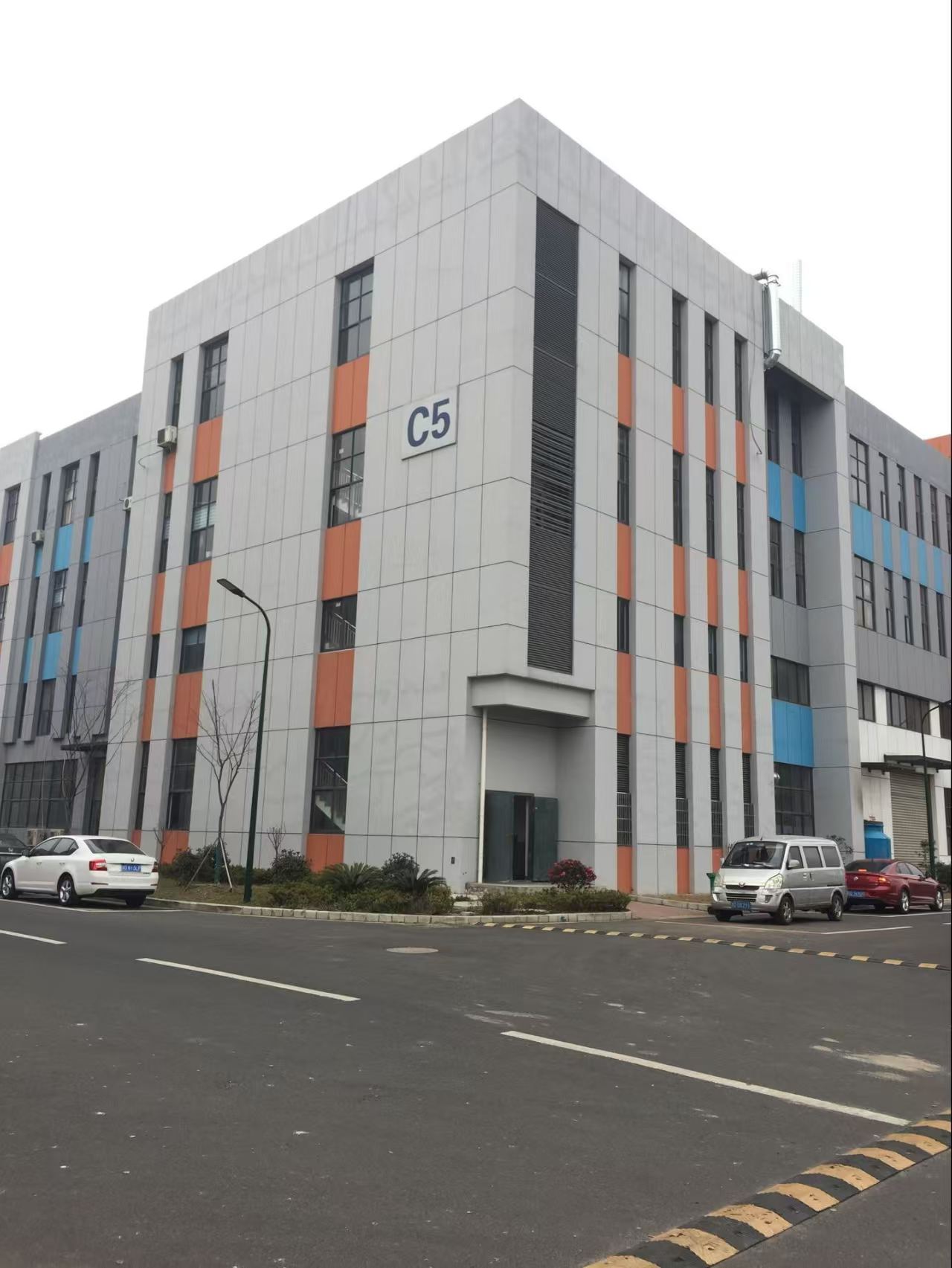
CABLE-LINK was established in 2007 and exports 100% of its output to the EU and USA markets.
Step 2 — On-site walk-through mapped to the five metrics
Walk the floor with the five metrics in hand and record evidence at each point: operator count per station, work-in-progress inventory, test benches, and the physical separation between extrusion, assembly, testing and packing. A walk-through that begins and ends in a showroom verifies nothing.
Step 3 — Capacity reconciliation
Rebuild the annual capacity figure in front of the supplier, then ask how the number changes with product mix. PD-rated assemblies typically require heavier conductors and additional shielding, which affects throughput per line. Comparing the result against the 20,000,000-unit, 6-line benchmark tells you whether a launch quantity is a routine order or a stretch order for that factory.
Step 4 — Process, tooling and in-house testing
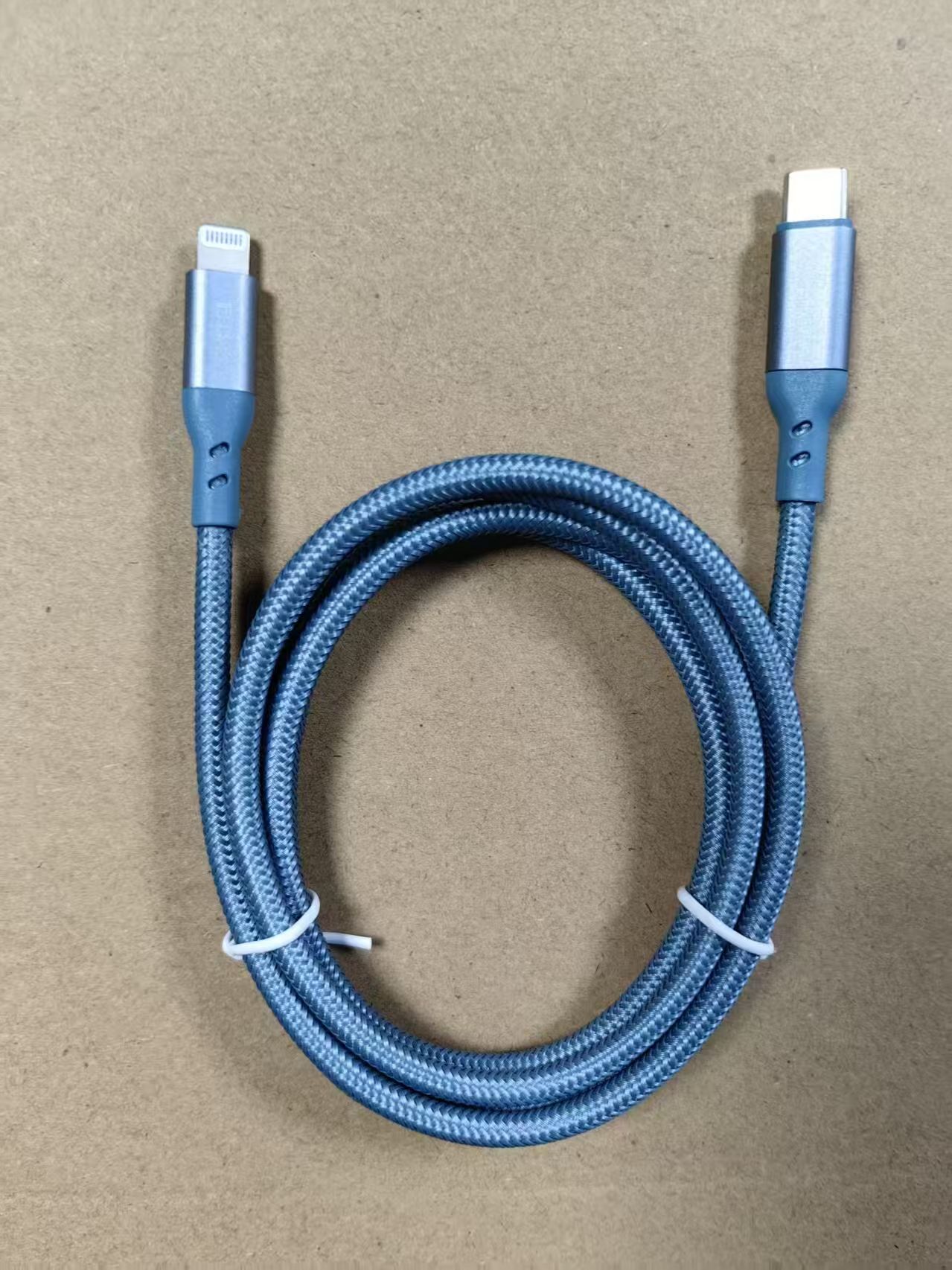
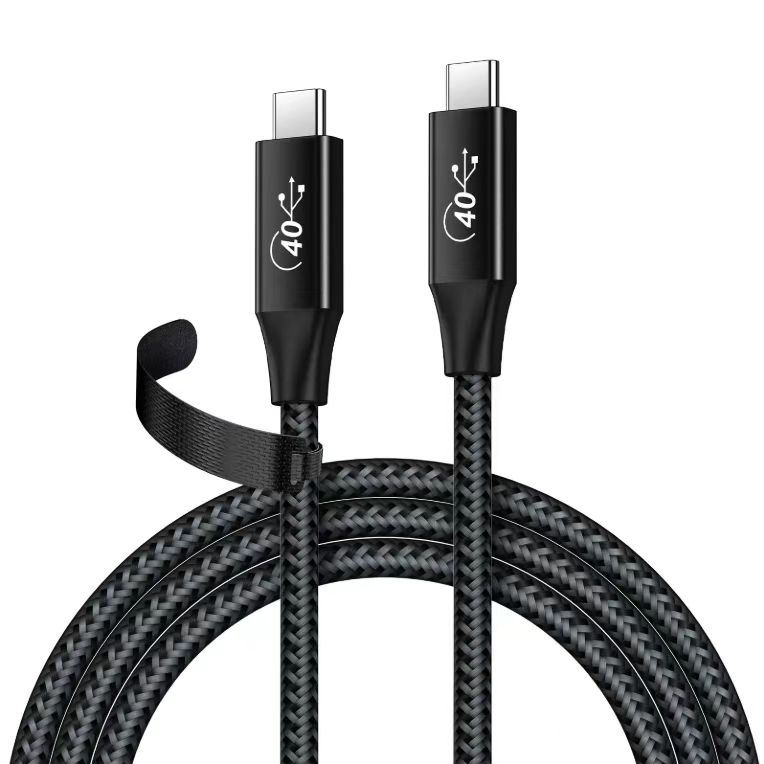
Confirm which process steps are performed in-house and which are subcontracted, then inspect the testing routine: which tests run on every batch, which run on samples, and which are sent to a third-party laboratory. CABLE-LINK states that it is equipped with advanced testing instruments to support stable, high-quality production — during an audit, the useful question is what those instruments measure and how results are recorded. For a model such as CLE-18014, a USB-C to USB-C PD fast charging and data cable rated at 100W (20V/5A) with optional 10 Gbps USB 3.2 Gen 2 data transfer and a USB 2.0 baseline of 480 Mbps, the test record should cover power delivery at rated wattage as well as data continuity.
CLE-18014 USB-C to USB-C PD cable: 100W (20V/5A), optional 10 Gbps data transfer for USB 3.2 Gen 2.
Step 5 — Pre-shipment test reports and delivery assurance
Ask to see a real pre-shipment test report from a recent order before you place one. A usable report identifies the purchase order, model, quantity, test items, measured values, pass/fail result, inspection date and the responsible inspector, and it should be signed or stamped. Delivery assurance is then simply the sum of verified capacity, available lines, in-house testing and a defined pre-shipment inspection step written into the order.
Step 6 — Decision: pass, conditional, or re-audit
Record the outcome in three categories and attach the corrective-action list to the purchase order or quality agreement. An audit that ends without a written action list is a marketing visit; an audit whose findings live inside the contract is a control.
Use Cases: When an Audit Changes the Buying Decision
EU brand launching a 100W PD charging cable. A European consumer electronics brand planning a USB-C charging cable SKU at 100W needs three things the audit can confirm in one visit: enough capacity for the launch quantity, CE, RoHS and REACH evidence for customs and retail, and a documented power-delivery test routine for a cable such as CLE-18014 rated at 100W (20V/5A). If the capacity arithmetic or the compliance evidence fails, the launch calendar changes — which is exactly the risk the audit exists to surface early.
US importer building a repeat-order programme. A US importer buying Type-c data cable volumes on a repeating schedule is less interested in peak capacity than in consistency. For this buyer, the pre-shipment report and the in-house test routine are the centre of gravity of the audit, supported by UL and FCC product evidence. The question is not whether the factory can make the cable once, but whether batch 12 will measure the same as batch 1.
Distributor assembling an accessory programme. Type-C cables are usually bundled with other accessories. CABLE-LINK's main products include Type-C cables, HDMI cables, network cables and power banks, and the wider catalogue includes accessories such as the CLE-05005 Type-C hub, which supports laptop charging up to 100W and multi-display output up to 8K@30Hz, and the CLE-18084 wall charger, which supports QC 3.0 and USB PD 2.0/3.0 with up to 65W output. For a distributor, auditing the cable line while confirming the surrounding range in the same visit shortens supplier qualification considerably.
Audit Checklist: Claim, Evidence, and Verified Benchmark
| Audit checkpoint | Typical supplier claim | Evidence to request | Verified benchmark (CABLE-LINK) |
|---|---|---|---|
| Facility footprint | "Large, modern factory" | Floor plan plus on-site zoning walk-through | 5,000 m² manufacturing facility; company established 2007 |
| Production lines | "Multiple production lines" | Line count by process, running status, changeover time | 6 production lines |
| Annual capacity | "Millions of units per year" | Calculation basis: shifts, units per hour, production days | 20,000,000 units annual capacity; daily cable capacity up to 50,000 pcs |
| Workforce and R&D | "Strong technical team" | Headcount by function; R&D headcount; in-house tooling | Approximately 65 employees; 3 R&D engineers |
| Certification and compliance | "ISO, CE, RoHS certified" | Certificate scope, validity, number verification with issuing body | ISO9001 and BSCI; products have passed CE, RoHS, REACH, HDMI, MFi, UL and FCC certification |
| Quality and delivery assurance | "100% inspected before shipment" | Real pre-shipment test report from a recent order | In-house advanced testing instruments supporting stable, high-quality production; export business accounts for 100% of sales to EU and USA markets |
Benchmark figures are the manufacturer's stated capability figures for Changzhou Cable-link Electronics Co., Ltd. Use them as a comparison standard, not as a claim that every supplier must match them.
FAQ: Type-C Cable Factory Audits
What certifications should a Type-C cable factory hold for EU and US exports?
Two layers matter. At company level, ISO9001 covers the quality management system and BSCI covers social compliance; both are commonly requested by importers and retail buyers. At product level, CE marking with RoHS and REACH documentation supports EU market access, while UL and FCC approval are typical requirements for the US. HDMI and MFi certification apply where the range includes those product categories. Buyers should also track the EU Common Charger Directive, which made USB-C mandatory for portable electronic devices from December 2024 and affects more than 400 million units annually. CABLE-LINK holds ISO9001 and BSCI certification, and its products have passed CE, RoHS, REACH, HDMI, MFi, UL and FCC certification.
How do I verify a supplier's claimed annual capacity of 20 million units?
Make the supplier rebuild the number. Annual capacity should reconcile from production lines, shift hours, units per hour and production days. 20,000,000 units across a year works out to roughly 55,000 units per day, and CABLE-LINK's stated daily cable capacity of up to 50,000 pcs is consistent with that annual figure and with a 5,000 m² facility running 6 production lines with approximately 65 employees. If the arithmetic cannot be reconstructed during the visit, treat the capacity figure as a sales claim rather than a planning input.
Does auditing a factory change the unit cost?
Not directly. The audit is a one-time verification activity, while unit cost is driven by materials and configuration — the CLE-18014 construction uses copper, TPE and nylon, with protocol support for PD 3.0, QC 3.0/4.0, AFC, FCP and SCP, a maximum current of 5A and a maximum voltage of 20V, plus optional 10 Gbps data transfer. What the audit changes is risk allocation: conformity failures, returns and re-orders cost more than the verification step, so procurement teams usually compare total cost of ownership rather than unit price alone.
How should I validate a Type-C PD cable sample?
Request the exact model you intend to buy and test it against the stated specification. For CLE-18014 the specification is a maximum of 100W at 20V/5A, optional USB 3.2 Gen 2 data transfer up to 10 Gbps and a USB 2.0 baseline of 480 Mbps. Practical sample checks include charging at the full rated wattage, sustained data transfer, connector retention and heat behaviour, and aligning the test items with the format of the pre-shipment report you will receive in mass production.
How does a factory audit reduce delivery risk?
Delivery assurance is the sum of verified capacity, available production lines, in-house testing and a defined pre-shipment inspection step. When capacity arithmetic, line count and staffing are confirmed on site, the schedule written into the purchase order rests on evidence rather than a sales promise. Buyers can request a Type-C cable sample, a capacity statement and the current certification list from CABLE-LINK by email at cablelink@cable-link.cn, by WhatsApp at +86 134-0131-8263, or through www.cable-link.cn.
Conclusion: Audit the Five Metrics, Then Validate with a Sample
A Type-C cable factory audit does not need to be complicated. Five metrics — floor space, production lines, annual capacity, workforce and R&D, and certification — cover the questions that decide whether a supplier can carry a programme. A 5,000 m² manufacturing facility, 6 production lines, 20,000,000 units of annual capacity, approximately 65 employees, 3 R&D engineers, ISO9001 and BSCI certification, and CE, RoHS, REACH, HDMI, MFi, UL and FCC product approvals form an auditable benchmark for those checks.
Run the desk review, walk the floor, reconstruct the capacity arithmetic, inspect the testing routine and ask for a real pre-shipment test report. Then close the loop the only way that proves anything: order a sample of the exact Type-C cable model you intend to sell and verify it against the specification before the purchase order is issued.
Validate specification on a sample first, then scale to mass production.
Request a Sample or the Factory Audit Pack
Changzhou Cable-link Electronics Co., Ltd. (CABLE-LINK) manufactures Type-C cables, HDMI cables, network cables and power banks at a 5,000 m² facility in Changzhou, Jiangsu, China, with 6 production lines, 20,000,000 units of annual capacity, approximately 65 employees and 3 R&D engineers. Export business accounts for 100% of sales, serving the EU and USA markets.
Email: cablelink@cable-link.cn · Tel / WhatsApp: +86 134-0131-8263 · Website: www.cable-link.cn
Address: C5, Hutang Science & Technology Industry Park, Hutang Town, Wujin, Changzhou, Jiangsu, China.
Have Questions or Need More Details?
Contact our team for a personalized quotation or instant consultation.
Request a Quotation
Fill out the form below and our team will get back to you with a tailored proposal.
WhatsApp Direct Chat
Prefer to chat in real-time? Message us on WhatsApp for instant assistance & quick answers.
- Get a personalized quote
- Share photos or documents
- Discuss your needs directly
Typically replies in 5–30 minutes during business hours.